A farming village
People here have always lived off the land. The soil of the Santerre, a deep, stone-free loam, is among the most fertile in Europe: of the commune's 1,113 hectares, nearly 970 are declared as farmland. But the village that works this land is no longer the one it used to be.
A thousand years of ploughing
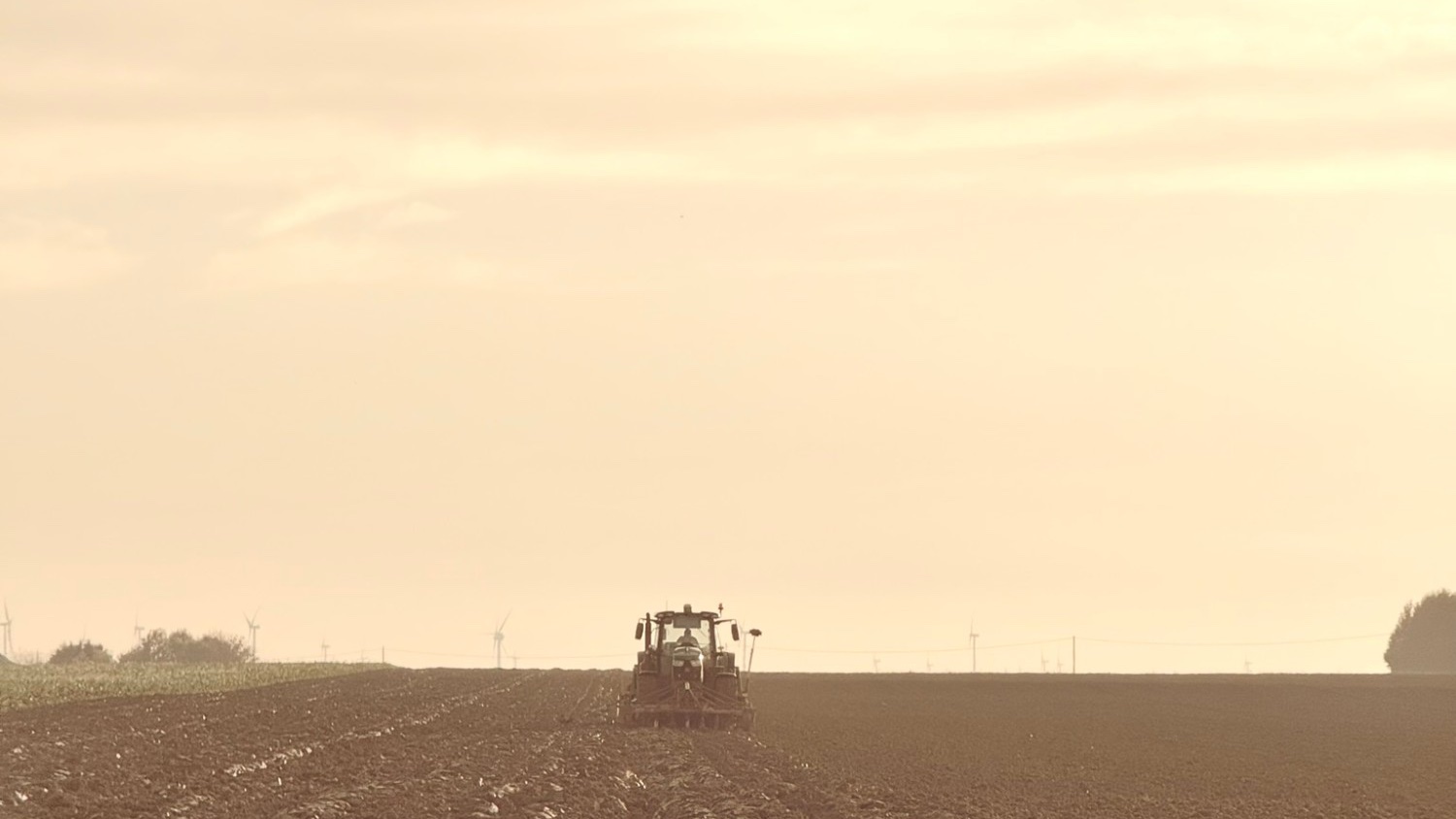
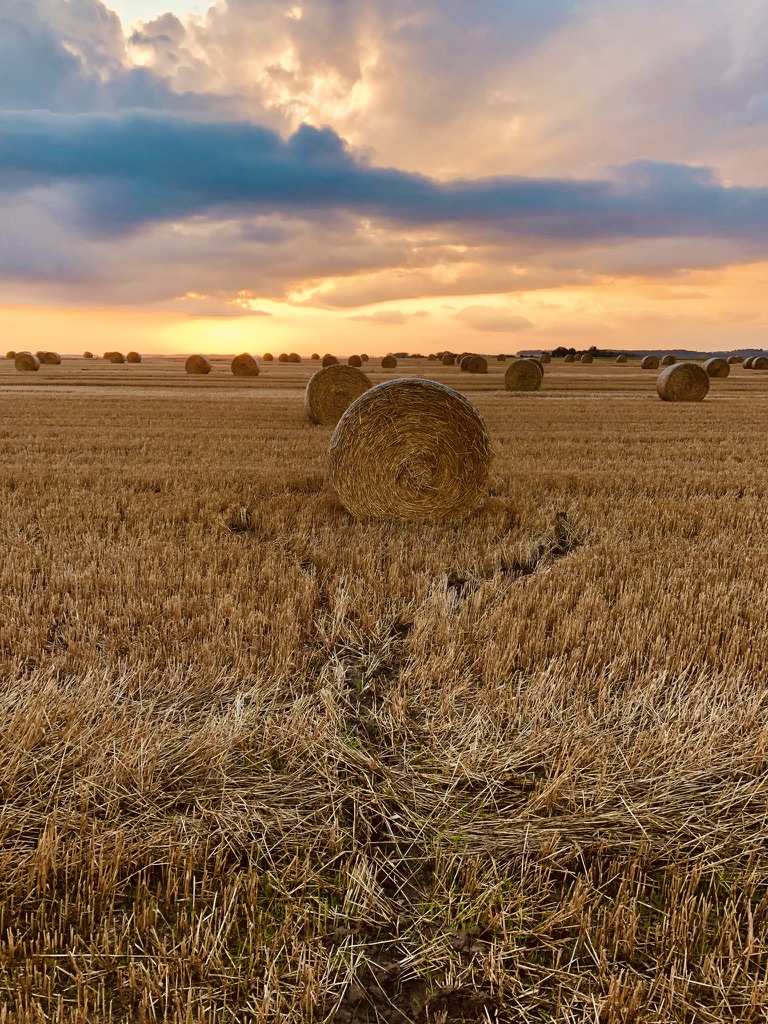
The Santerre, "the good land", was covered with forest in the early Middle Ages before being largely cleared for farming. In Dompierre, the priory founded in the 12th century and attached to the Order of Cluny was turned into a large farm in 1383. In 1597, war prevented ploughing and the monks had to lower the rents.
The great change came with the sugar beet. Dompierre's sugar mill was founded in 1879, and in 1899 the village schoolteachers describe a commune already geared towards it: in Dompierre, half the land is in cereals, a third in beets, and the rest in fodder crops. They also count 128 horses, 280 cattle including 175 dairy cows, 801 sheep and 84 pigs, and say farm machinery "makes progress every day". Read the 1899 reports.
The First World War razed the village. After the Reconstruction, land holdings were consolidated: in the Santerre, land consolidation came earlier and went further than elsewhere in the Somme. The sugar mill closed in 1988; beets now go to other factories. And in 2023, vines returned, with the Les 130 winery.
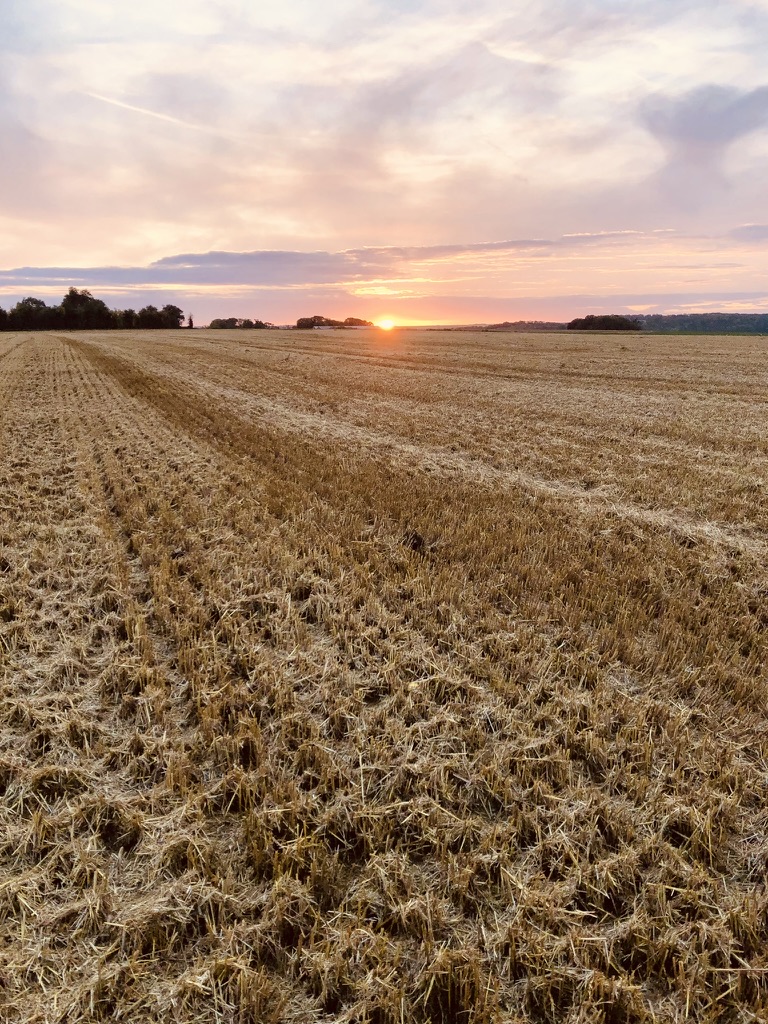
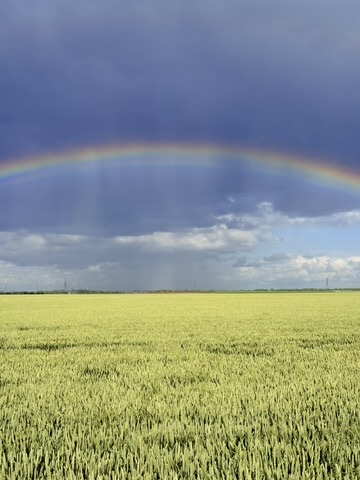
Through the seasons
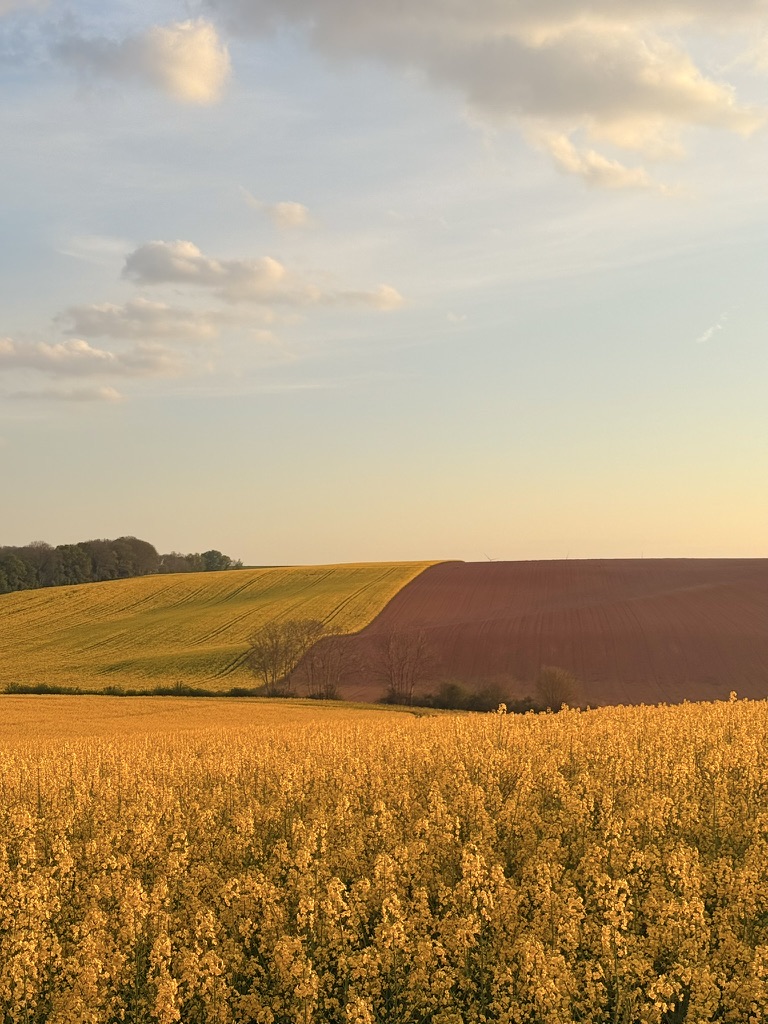
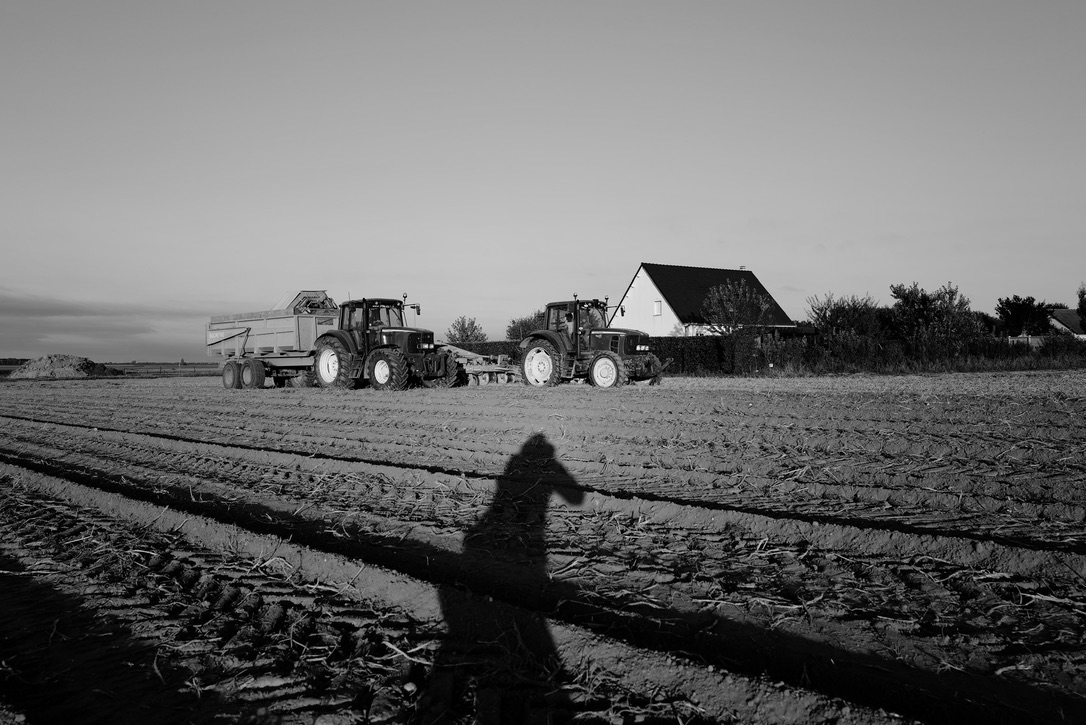
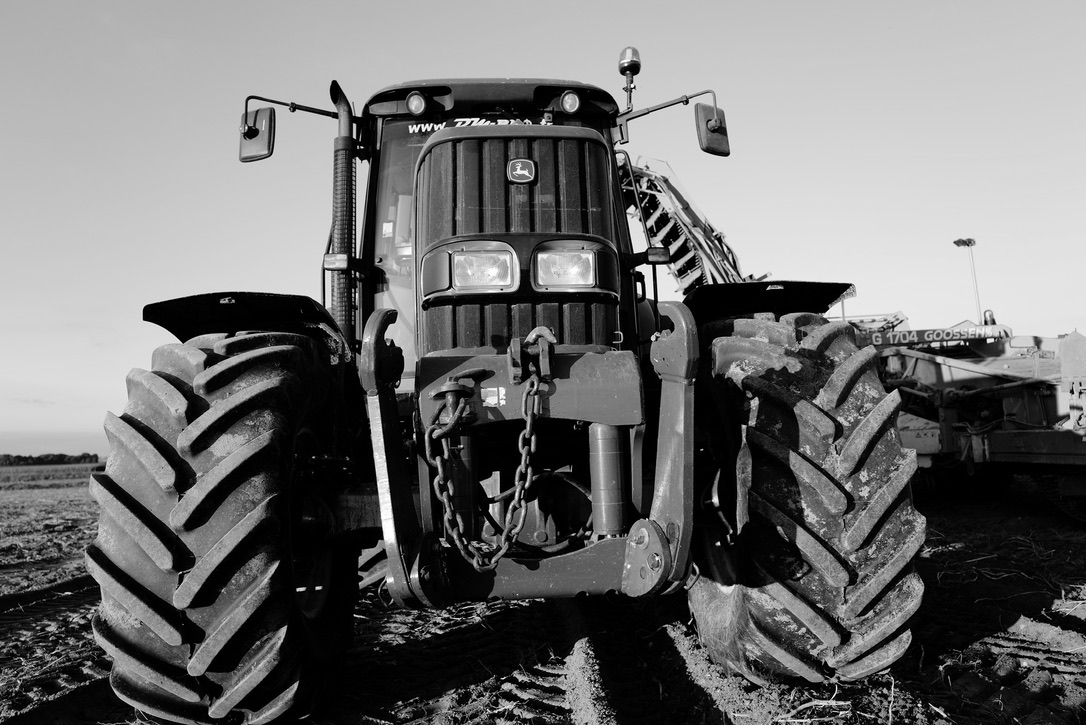
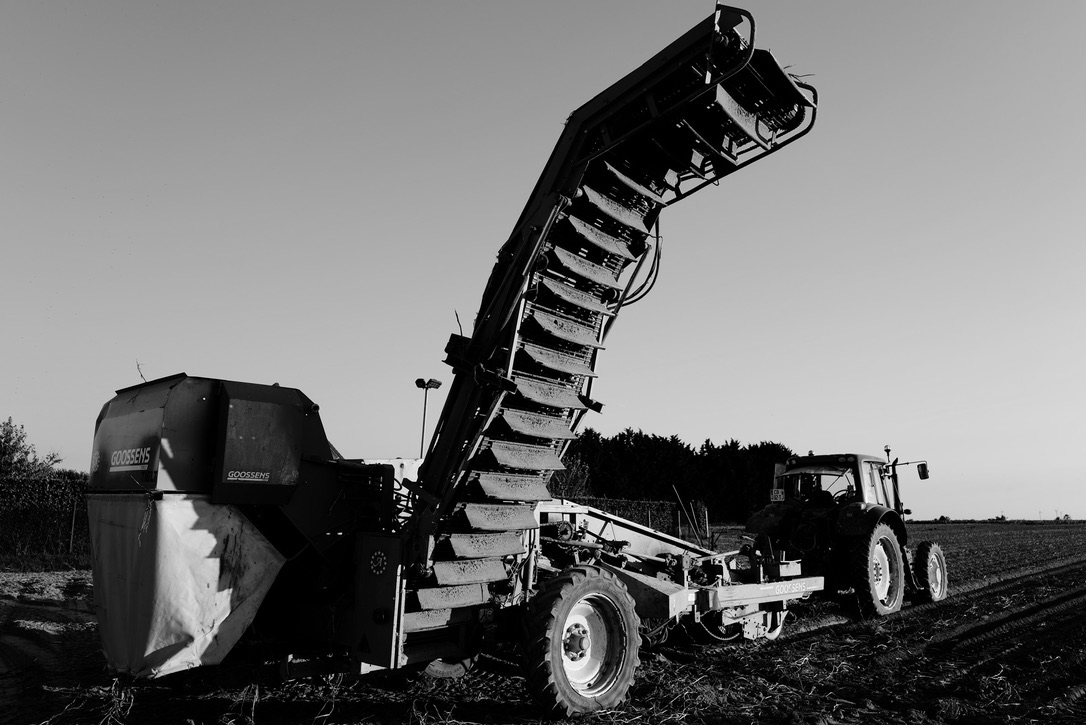
The harvest, in black and white

Eleven cafés, a butcher's, a co-op
When the father of this site's editor was a child, in the years after the Second World War, the village had eleven cafés, a butcher's shop and a cooperative that sold "a bit of everything". There were far more people in the streets, because there were far more hands in the fields.
Then tractors replaced horses, machines replaced farmhands, and farms merged. Today only a few farms remain, sharing all the land in the commune between them. The village has 709 inhabitants; it still has a pharmacy, a post office counter, a farm shop and a bread vending machine. The rest of life is in the fields, and with the people who work them.
Not all the land is large-scale farming: an organic orchard of about a hundred fruit trees grows in the village, next to the Back to 1977 gîte (owned by the editor of this site).
What is grown in Dompierre-Becquincourt?
Here, based on farmers' declarations in 2024, is the breakdown of crops over the commune's 971 declared hectares.
Source: Registre parcellaire graphique 2024 (IGN, Agence de services et de paiement), via the Géoplateforme. Plots are assigned to the commune by their centre point; figures are rounded.
How many potatoes is that?
By multiplying each area by an average yield per hectare, we can estimate what the village's fields produce each year. For 2024, with the declared areas, that comes to roughly:
- 3,260 tonnes of wheatenough for millions of baguettes
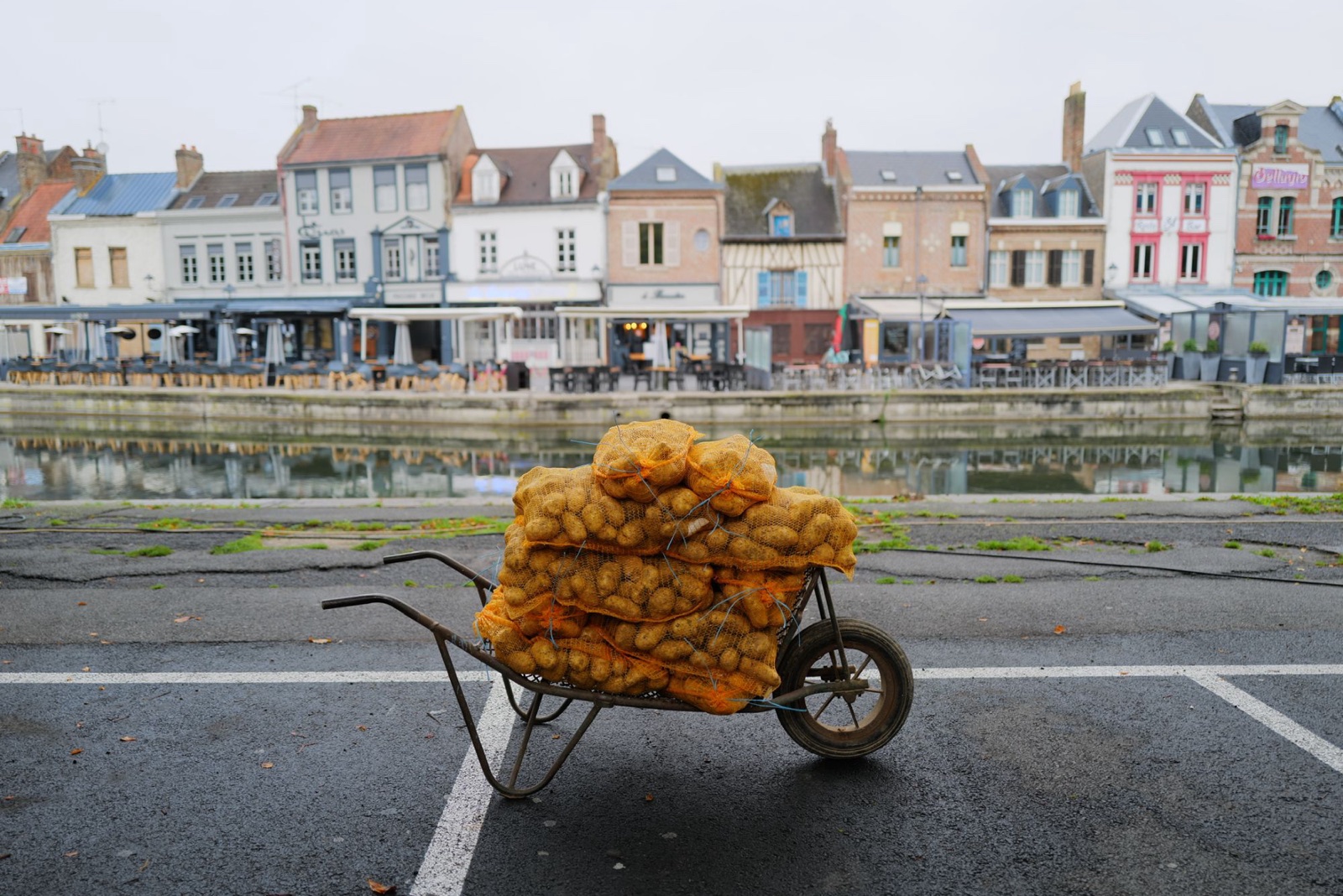
- 9,100 tonnes of potatoesabout 13 tonnes per inhabitant of the village
- 11,800 tonnes of sugar beetenough to make about 2,010 tonnes of sugar
| Year | Bread wheat | Potatoes | Sugar beet |
|---|---|---|---|
| 2022 | 474 ha → 3,500 t | 223 ha → 9,700 t | 194 ha → 16,000 t |
| 2023 | 464 ha → 3,430 t | 244 ha → 10,600 t | 133 ha → 11,000 t |
| 2024 | 441 ha → 3,260 t | 209 ha → 9,100 t | 143 ha → 11,800 t |
And in chips?
Just for fun: with 9,100 tonnes of potatoes, how many portions of chips? Counting 250 g of raw potatoes for a 150 g portion of chips, that makes about 36 million portions.
If every French person ate one portion on the same day, Dompierre's harvest would serve a little over one French person in two: France has about 68 million inhabitants, so it would take the harvest of two villages like ours to give the whole country chips for a day. And for the commune's 710 inhabitants, that would be more than 50,000 portions each, or about 140 a day for a year.
Just a bit of fun: peeling, cutting and cooking change how many potatoes are needed, and not all the village's potatoes are meant for chips.
How to read these figures
- These are estimates, not measured harvests. Nobody publishes the output of a single commune: I multiplied the areas by average yields per hectare.
- Yields used: national 2023 averages from Agreste (the statistics service of the Ministry of Agriculture): 73.9 quintals per hectare for wheat, 43.4 tonnes for potatoes, 82.6 tonnes for sugar beet. The Santerre's loam has a reputation for high yields: the real harvest may be higher, but it varies a great deal from year to year.
- For sugar, I assumed about 17% sugar content in the beet, a commonly used rule of thumb.
- Not every crop is counted: peas, beans, rapeseed, maize, onions… also take up fields.