Wildlife and plants of the Santerre and the Haute Somme
From the farmed plateau to the chalk grasslands and the ponds, a village at the crossroads of three landscapes, and of a great many birds.
From the plateau to the valley
Dompierre-Becquincourt sits on the Santerre plateau, but nature changes with every kilometre as you go down towards the Somme.
The open fields
At Dompierre, 92% of the commune is arable land and no watercourse crosses it. This is the world of big fields, open horizons and plains wildlife.
The chalk grasslands
On the chalk slopes of Frise and Éclusier-Vaux, calcareous grasslands shelter orchids and plants with a Mediterranean look. Only 5% of what existed at the start of the 20th century survives in Picardy.
Marshes, ponds and reedbeds
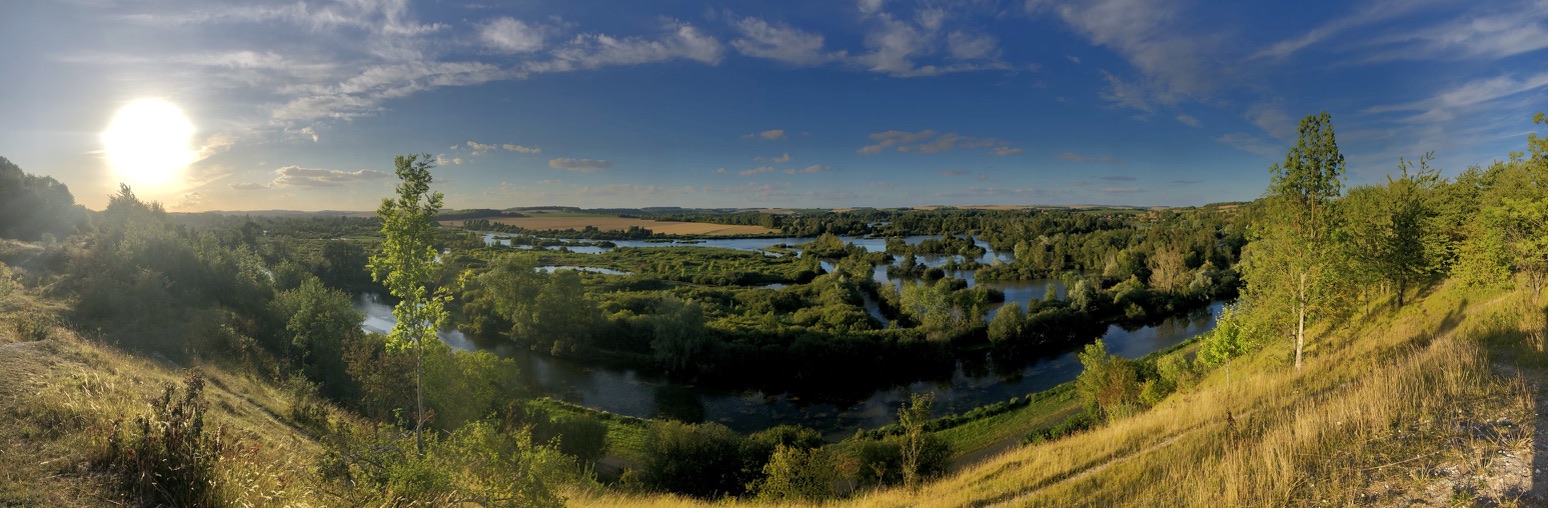
On the valley floor lie alkaline fens, ponds and reeds. The Natura 2000 site "Middle Somme valley" covers about 1,800 hectares, from Corbie to Péronne; the Ramsar site of the Somme and Avre valleys covers more than 13,000 hectares.
How to read this page. It gathers what public sources (the national botanical conservatory, the Somme Department, Natura 2000 sites, Wikipedia, Picardie Nature) say about the Haute Somme and Picardy. As far as we know, no inventory has been published for the commune alone: the lists below are therefore not a census of Dompierre, but species recorded in the region and typical of these habitats. Residents' observations are welcome to complete it.
The birds
The ponds of the Haute Somme serve as a migration stopover, a winter refuge and a nesting ground. At the Cléry-sur-Somme ponds, close by, more than 90 bird species have been recorded.
The Frise viewpoint, an observation post
From the Frise viewpoint you look down on the ponds and marshes: an ideal observation post, especially in spring and autumn. Five interpretation panels tell the story of the valley, one of them devoted to the wildlife and plants of the chalk grasslands. No published list is specific to this viewpoint: the one below gathers the species recorded in the Haute Somme and in Picardy in the habitats you can see from it.
To go further, the Cléry-sur-Somme ponds (a sensitive natural area managed by the Department) have a 2.5 km trail with three hides, where you may see pochards and common terns. The birds nest there from March to August: stay on the paths and avoid disturbing them.
Reedbeds and marshes: the discreet ones
In the reeds live birds you hear more than you see. The little bittern, the smallest heron in Europe, nests there in summer. The Eurasian bittern stays all year: its deep boom carries a long way across the valley. The bluethroat, the bearded reedling, Cetti's warbler and the reed warblers complete the marsh chorus. The marsh harrier quarters the reedbed in search of prey. Little bittern, lapwing and marsh harrier are cited among the remarkable birds of the Somme valley.
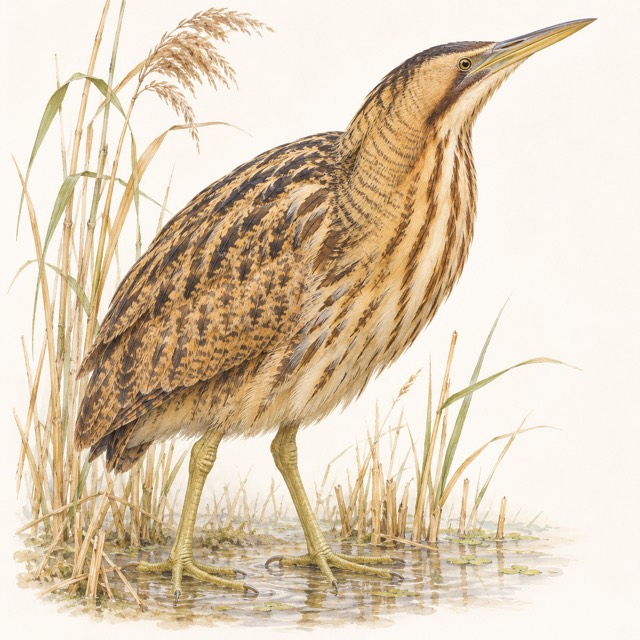 Eurasian bittern Botaurus stellaris resident breeder
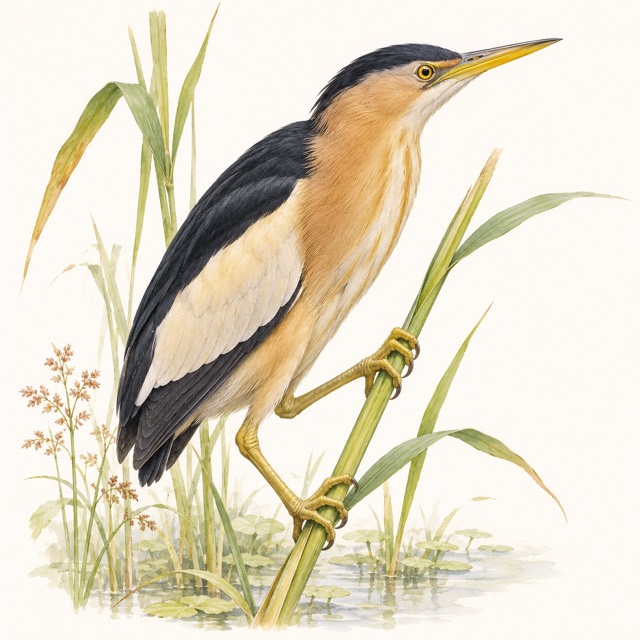 Little bittern Ixobrychus minutus summer breeder
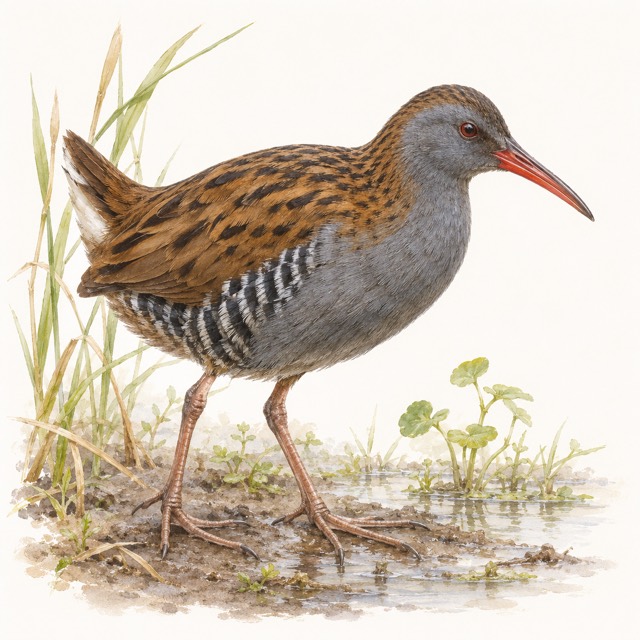 Water rail Rallus aquaticus breeding
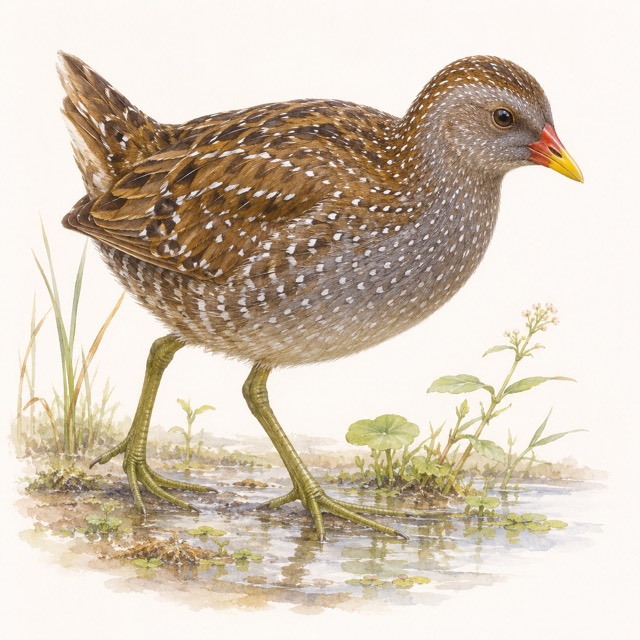 Spotted crake Porzana porzana breeding, migrant and wintering
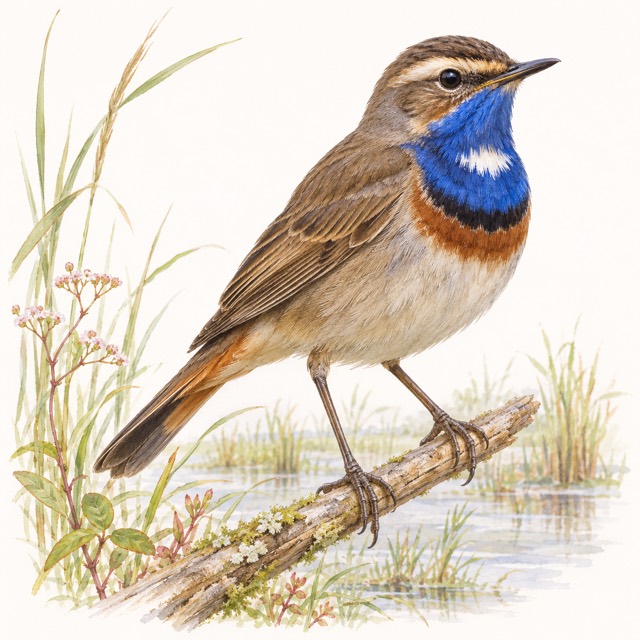 Bluethroat Luscinia svecica breeding and migrant
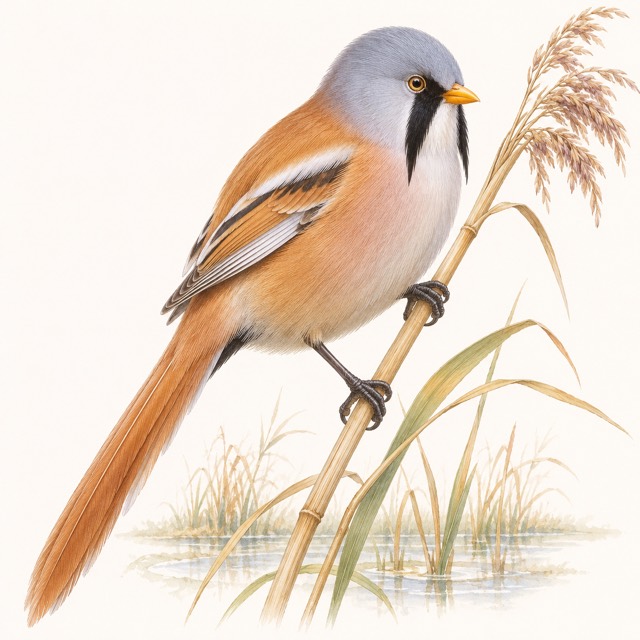 Bearded reedling Panurus biarmicus breeding, migrant and wintering
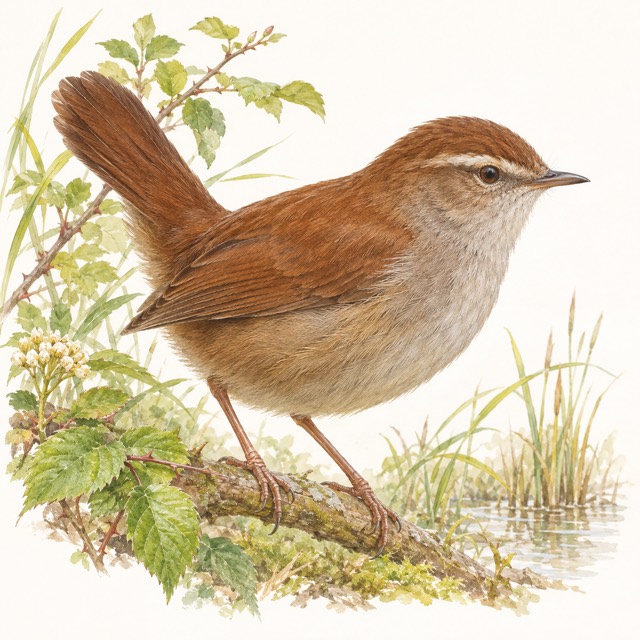 Cetti's warbler Cettia cetti breeding
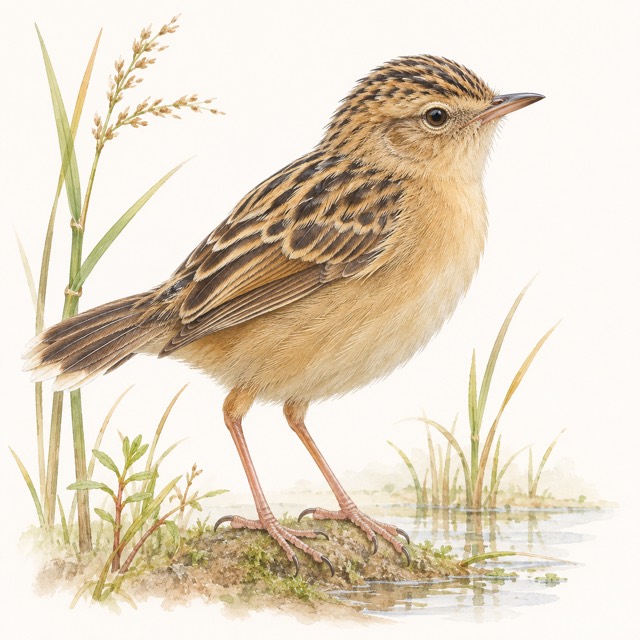 Zitting cisticola Cisticola juncidis breeding
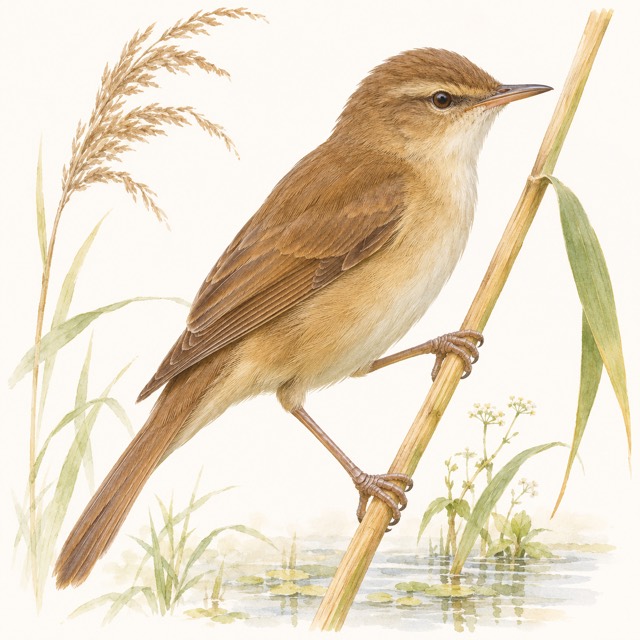 Eurasian reed warbler Acrocephalus scirpaceus summer visitor
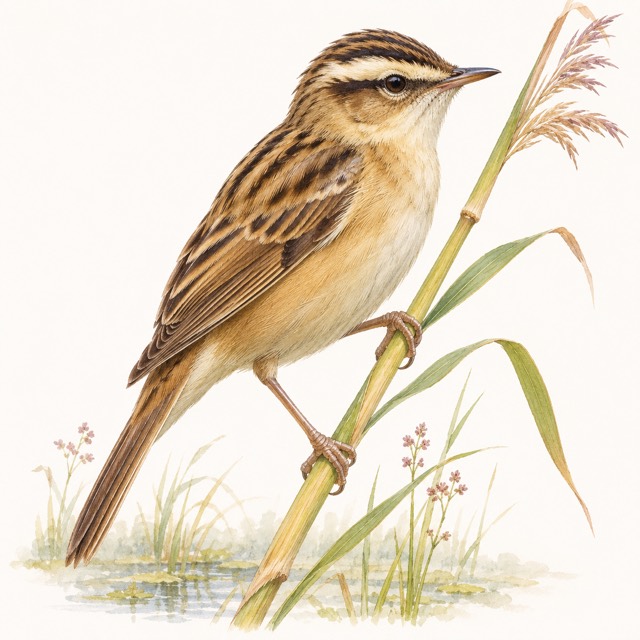 Sedge warbler Acrocephalus schoenobaenus summer visitor
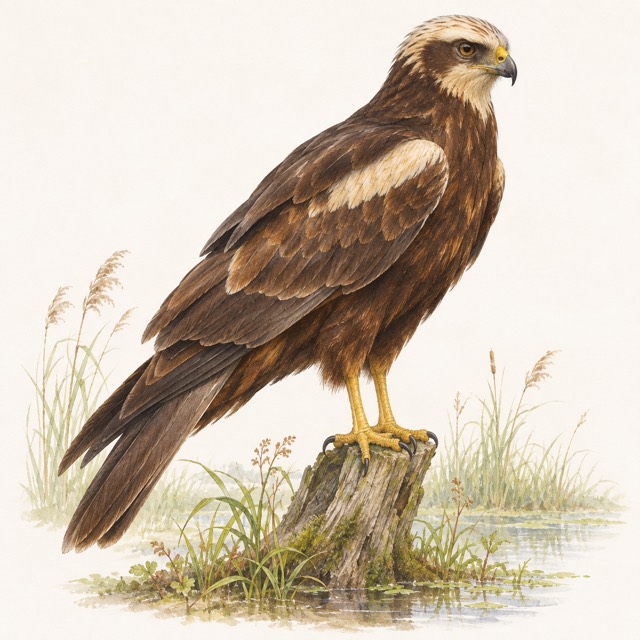 Western marsh harrier Circus aeruginosus breeding, migrant and wintering
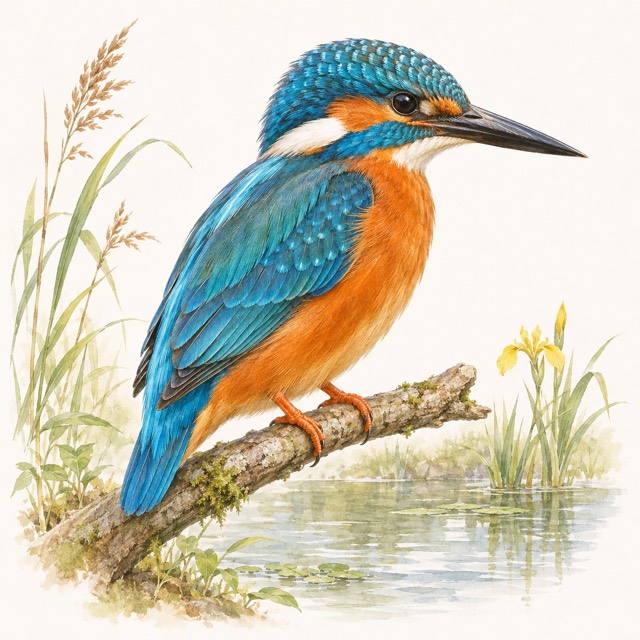 Common kingfisher Alcedo atthis breeding, migrant and wintering
On the water and along its edges
The ponds host waterbirds all year round. In winter, ducks gather in their hundreds, like the pochard recorded at Cléry; common terns breed there in summer. The grey heron fishes by standing and waiting at the water's edge, and the great egret, a white heron, is seen more and more often. The white stork nests in Picardy. The kingfisher flashes low over the water like a blue streak: you notice its shrill call long before you see it.
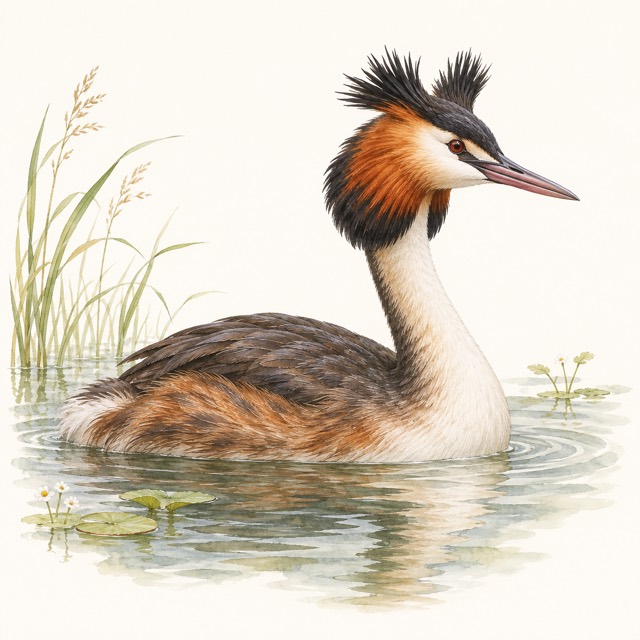 Great crested grebe Podiceps cristatus
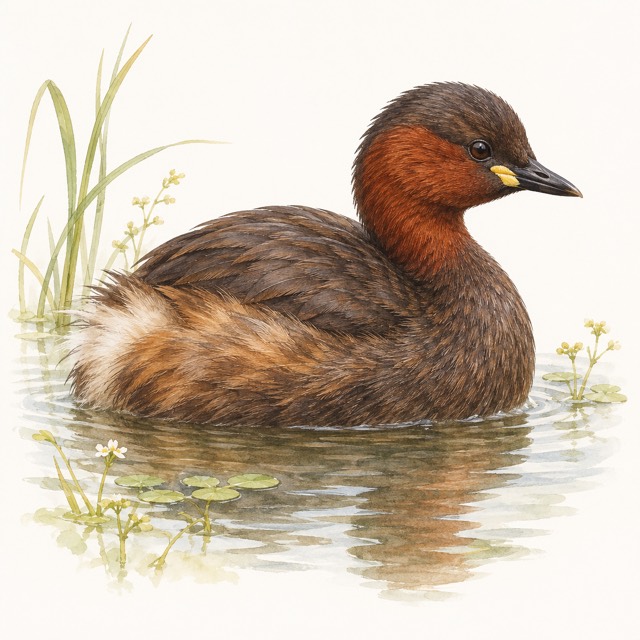 Little grebe Tachybaptus ruficollis
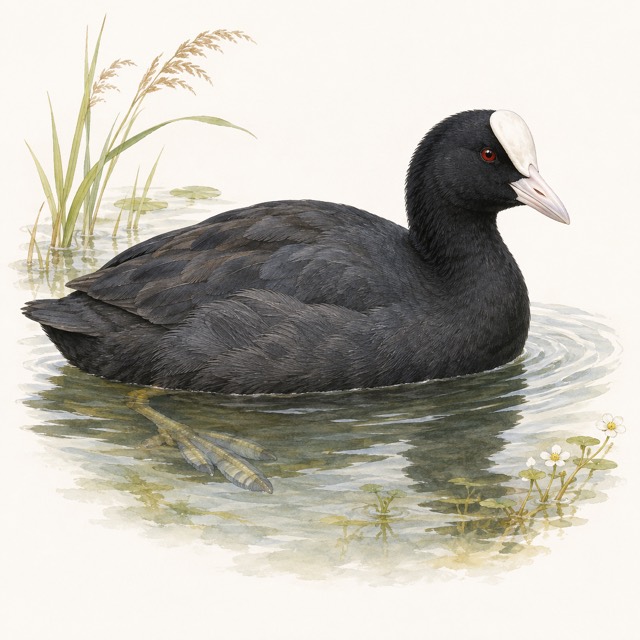 Eurasian coot Fulica atra
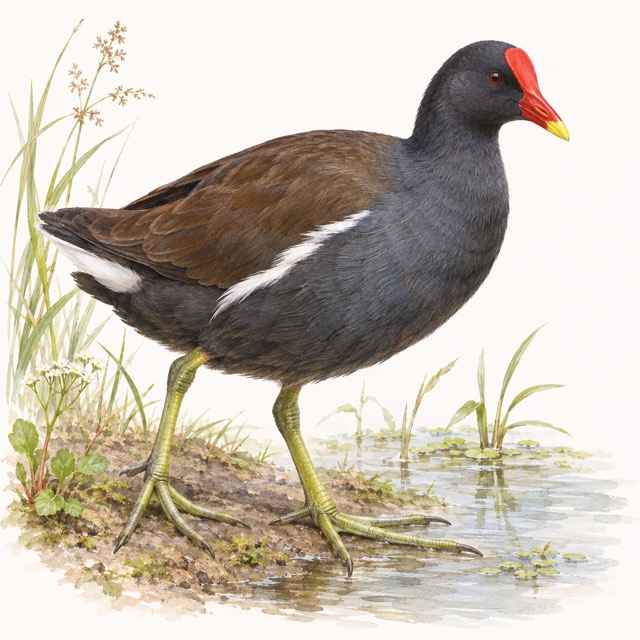 Common moorhen Gallinula chloropus
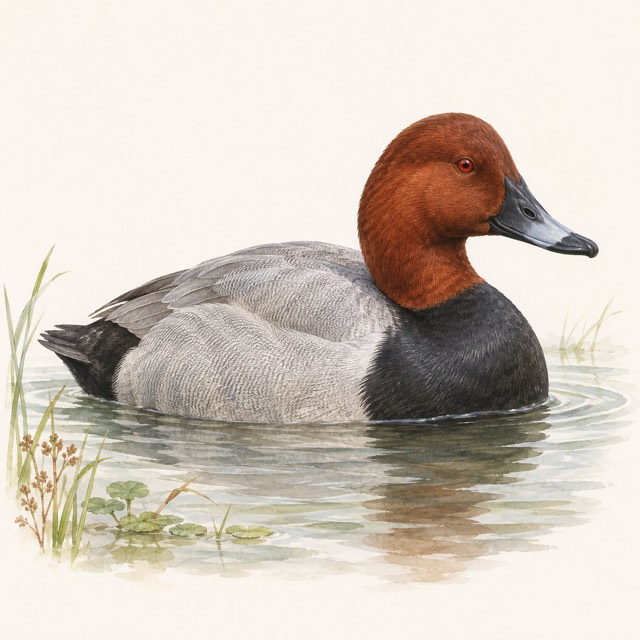 Common pochard Aythya ferina recorded at the Cléry ponds
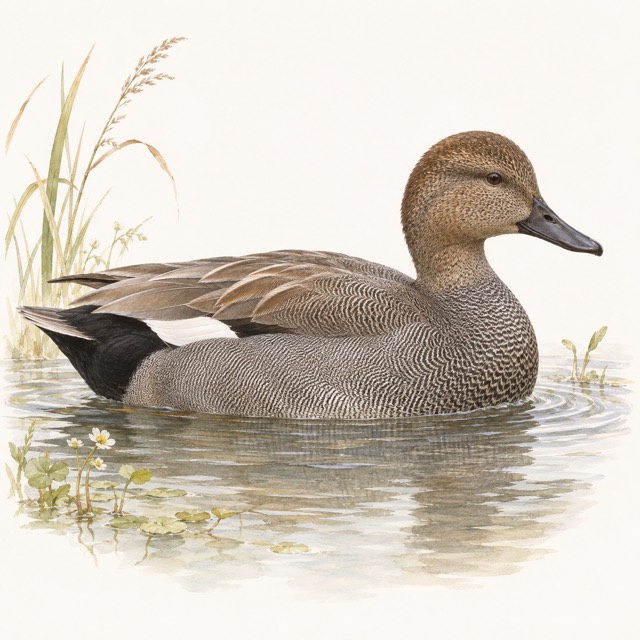 Gadwall Mareca strepera
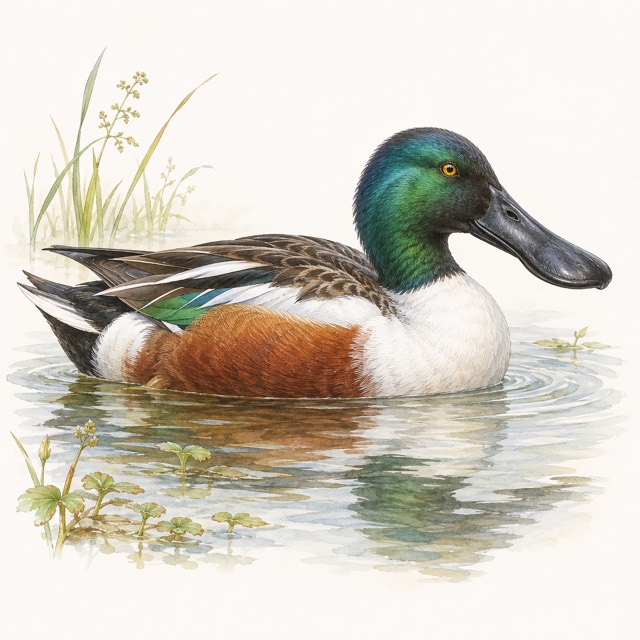 Northern shoveler Spatula clypeata
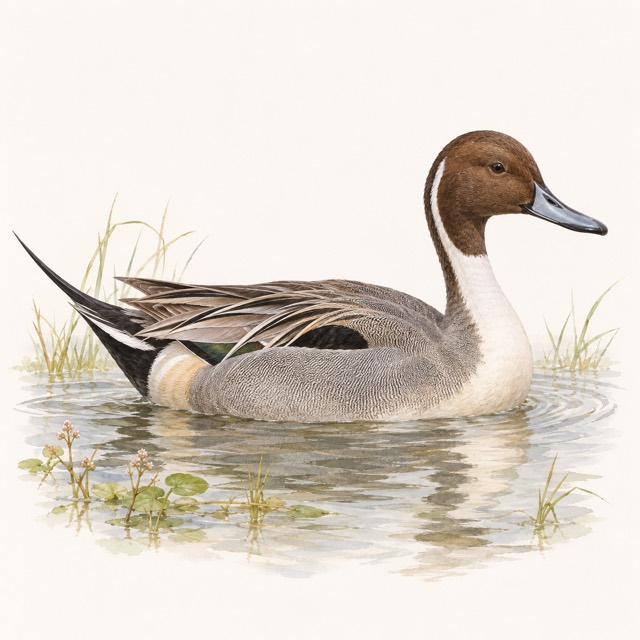 Northern pintail Anas acuta
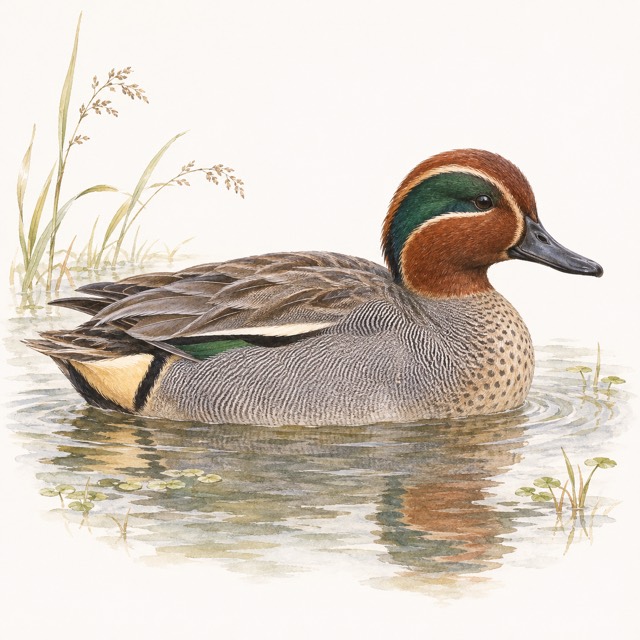 Eurasian teal Anas crecca
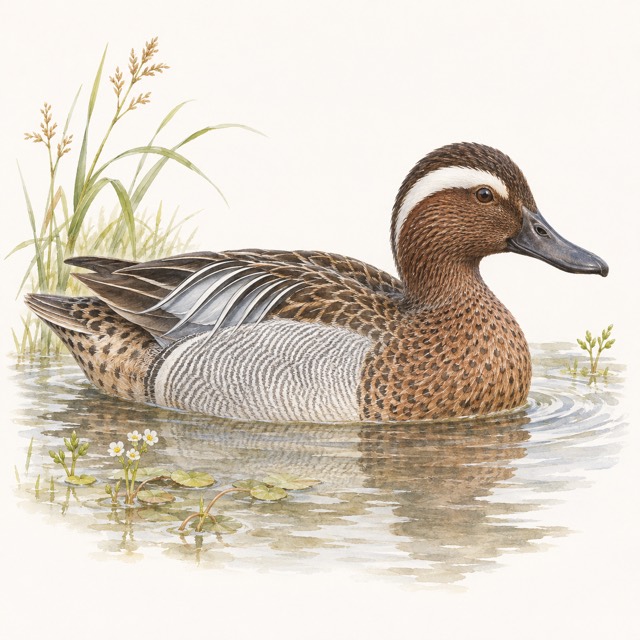 Garganey Spatula querquedula
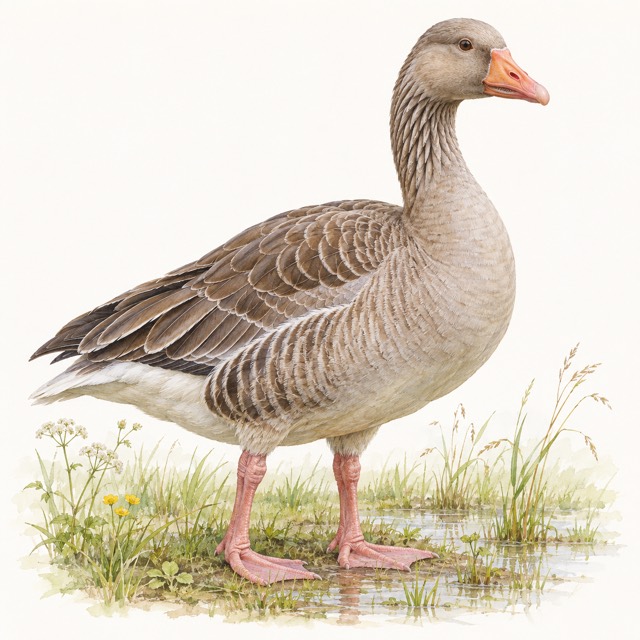 Greylag goose Anser anser breeding, migrant and wintering
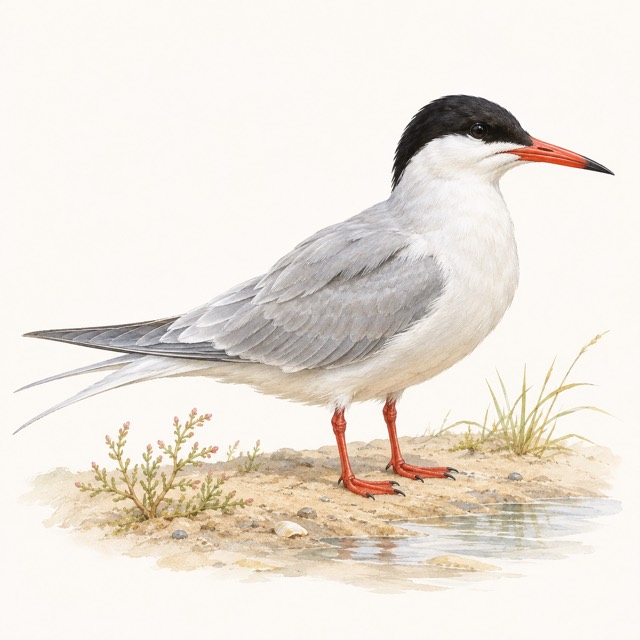 Common tern Sterna hirundo recorded at Cléry: breeds there
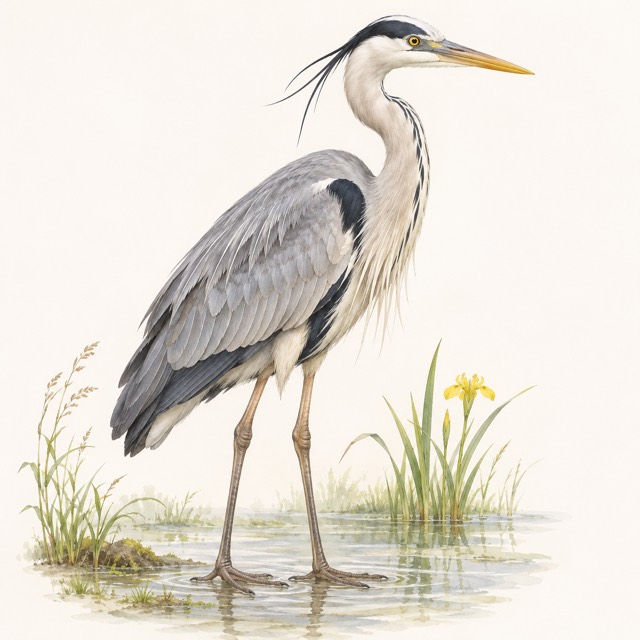 Grey heron Ardea cinerea
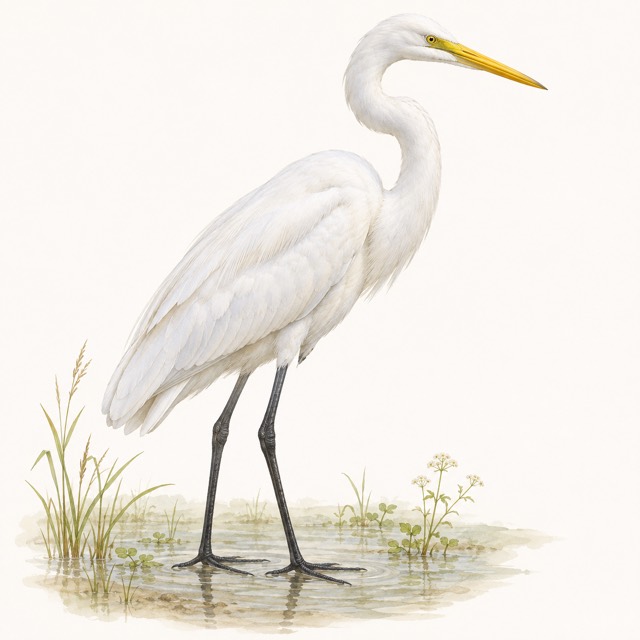 Great egret Ardea alba
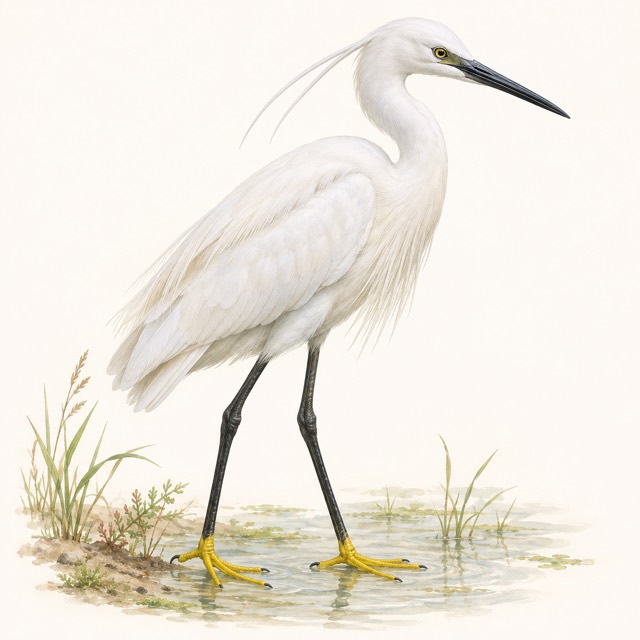 Little egret Egretta garzetta
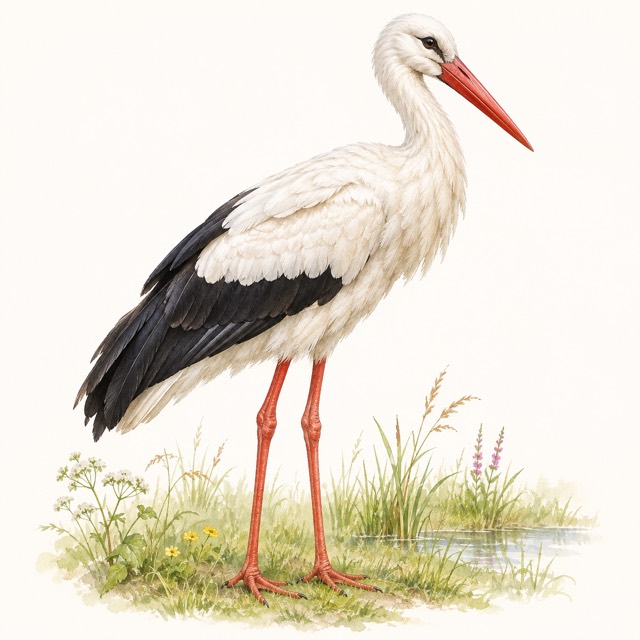 White stork Ciconia ciconia breeding, migrant and wintering
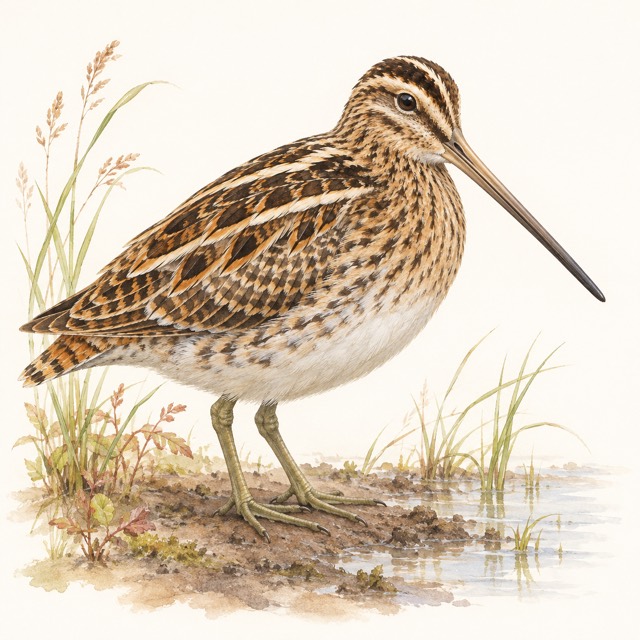 Common snipe Gallinago gallinago breeding, migrant and wintering
The fields: birds of the plain
On the plateau around the village live the birds of the big arable fields. The stone-curlew, a steppe bird with large yellow eyes, lays its eggs on bare ground in the fields and is most active at dusk. The harriers, hen and Montagu's, also nest in the crops: their nests risk being cut at harvest, and Picardie Nature runs nest rescue operations every year. The grey partridge, the quail, the lapwing, the skylark and the corn bunting complete the cast. In winter, golden plovers and hen harriers overwinter on the plain.
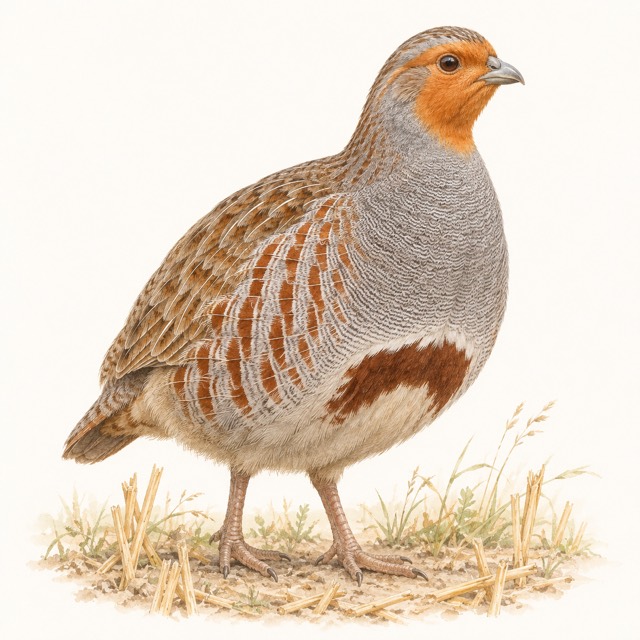 Grey partridge Perdix perdix breeding
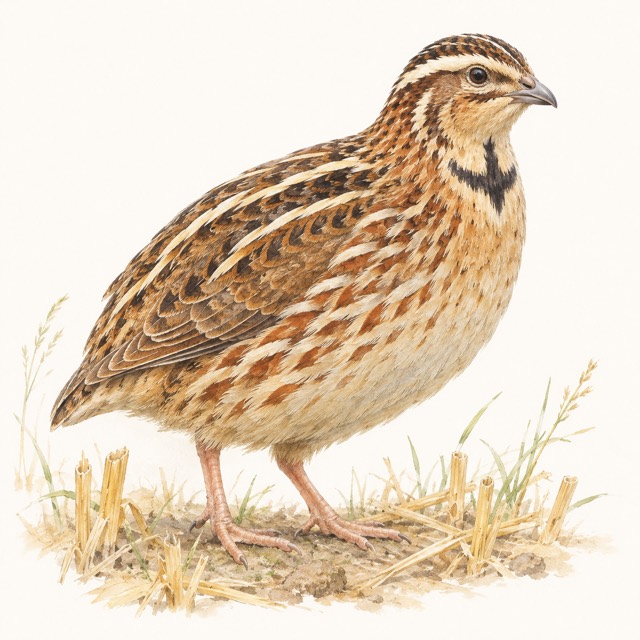 Common quail Coturnix coturnix summer breeder
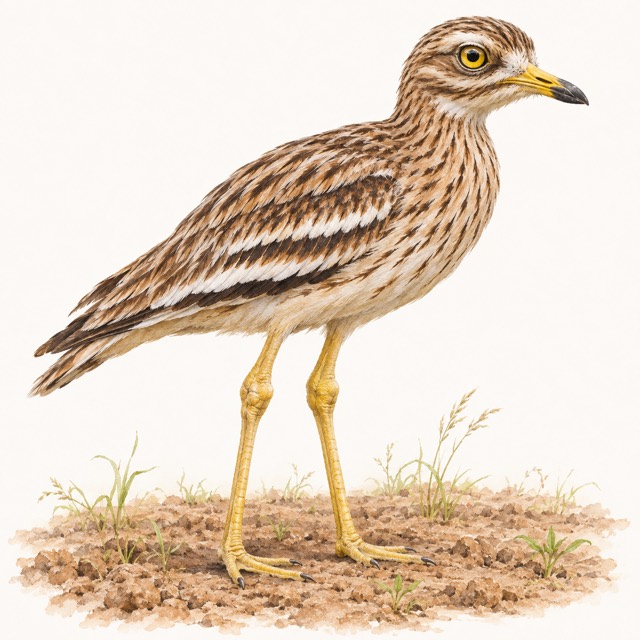 Eurasian stone-curlew Burhinus oedicnemus breeding and migrant
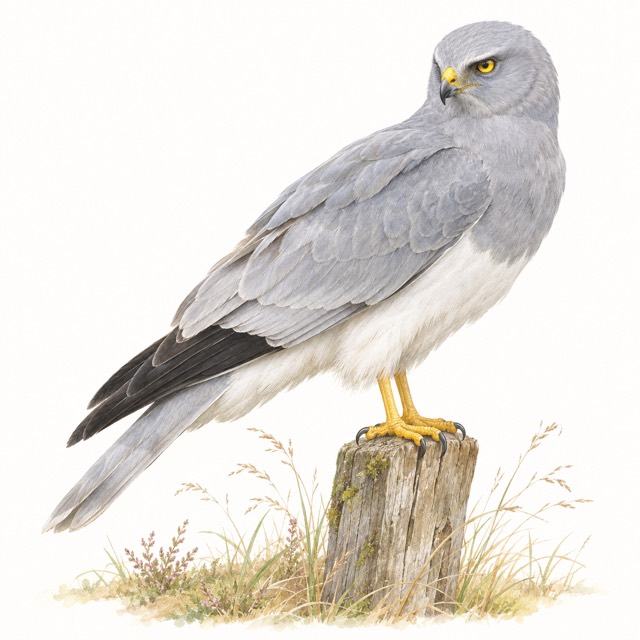 Hen harrier Circus cyaneus breeding, migrant and wintering
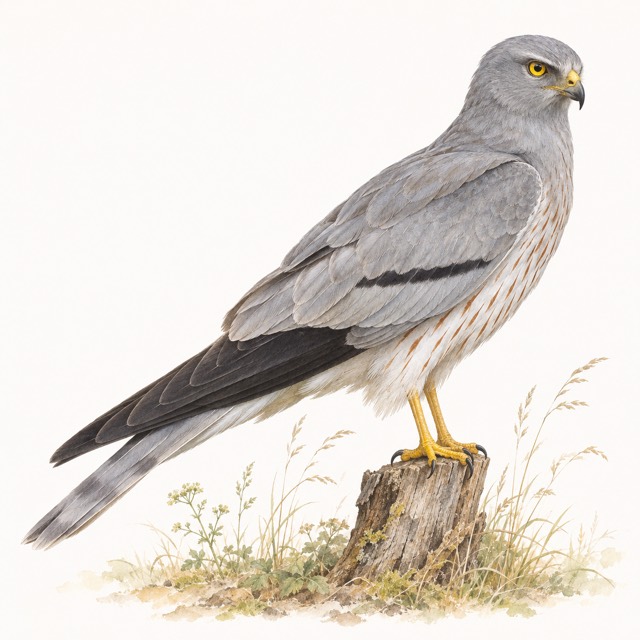 Montagu's harrier Circus pygargus summer breeder
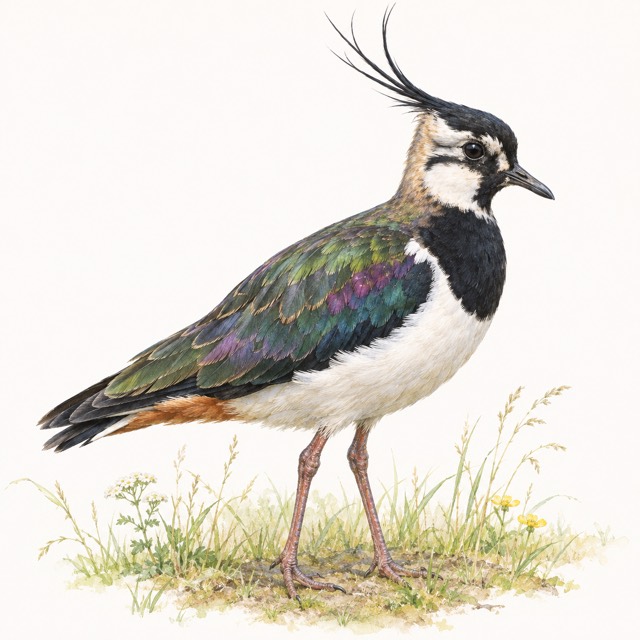 Northern lapwing Vanellus vanellus breeding
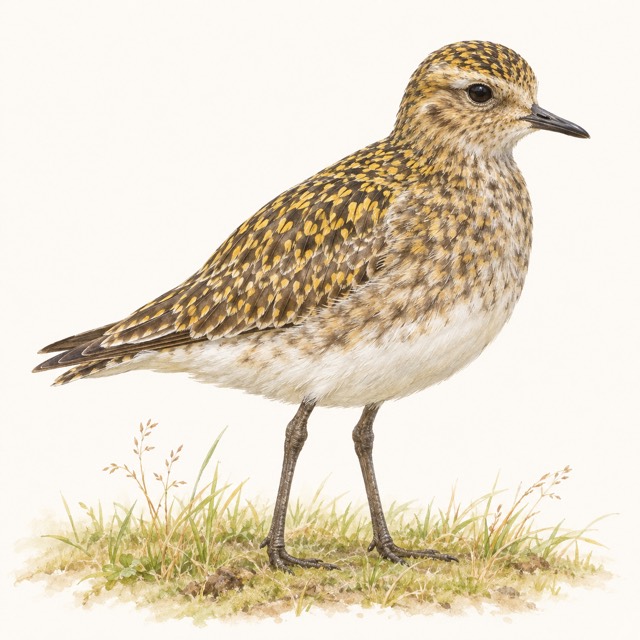 European golden plover Pluvialis apricaria migrant and wintering
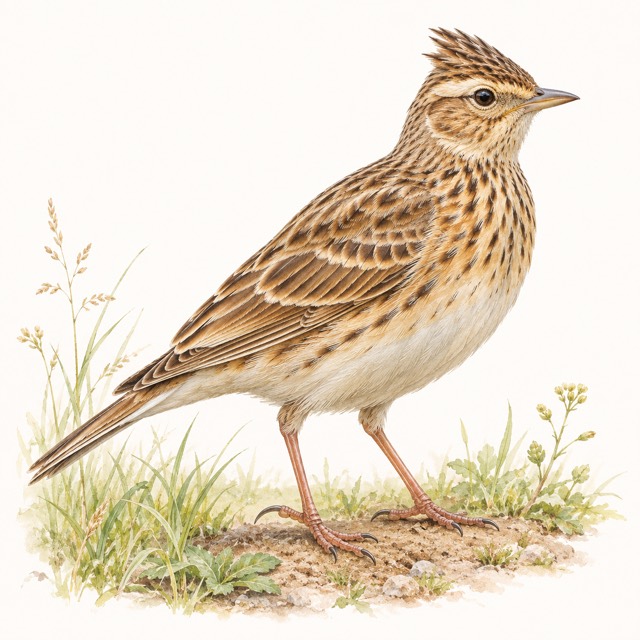 Eurasian skylark Alauda arvensis breeding, migrant and wintering
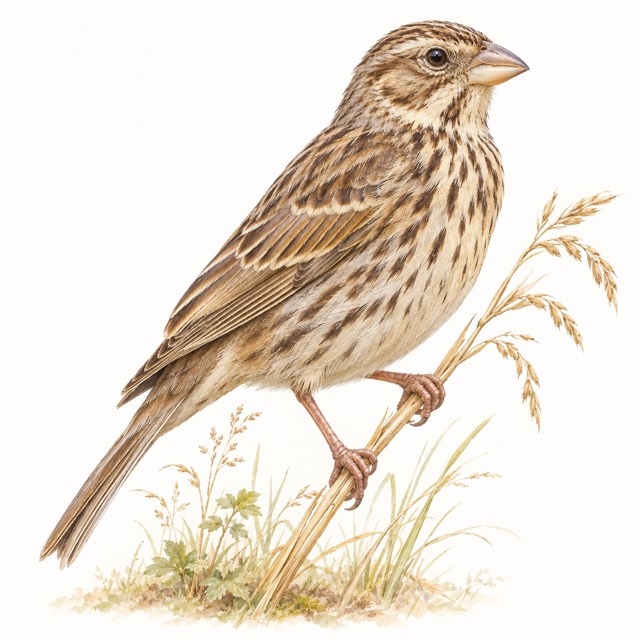 Corn bunting Emberiza calandra breeding, migrant and wintering
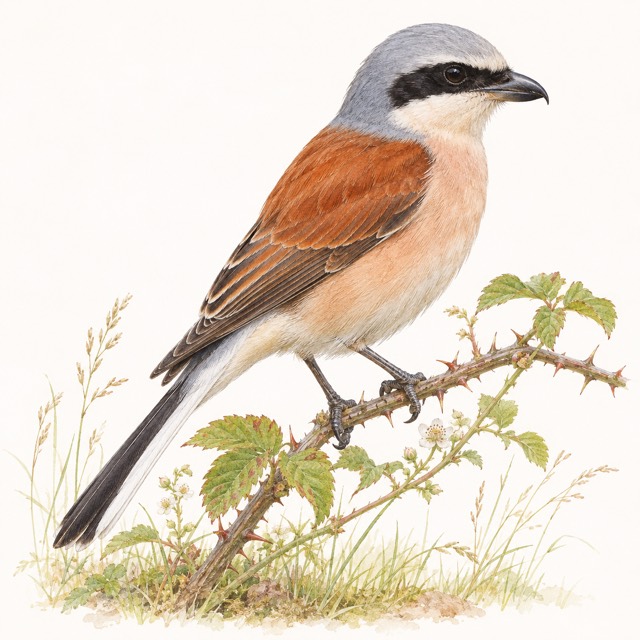 Red-backed shrike Lanius collurio summer breeder
And all the others
Buzzards, kestrels, owls, swallows, swifts, tits, woodpeckers, robins: every walker also meets the common species of the countryside and gardens. We will describe them, with photographs, as residents' observations are gathered.
When to watch
- Spring. Songs, the arrival of summer visitors, courtship displays: the best season for the reedbeds.
- Summer. Broods last until August: stay discreet and on the paths.
- Autumn. Migration makes a stopover on the ponds.
- Winter. Large gatherings of waterbirds, and the winter visitors of the plain.
The statuses shown (breeding, migrant, wintering) come from the list of the birds of Picardy, a regional list that is still incomplete: they describe the region, not the commune.
The mammals
Foxes, wild boar, roe deer, badgers, squirrels, stone martens, weasels: the list of Picardy's mammals includes all the animals you expect to meet in the Santerre.
The large mammals
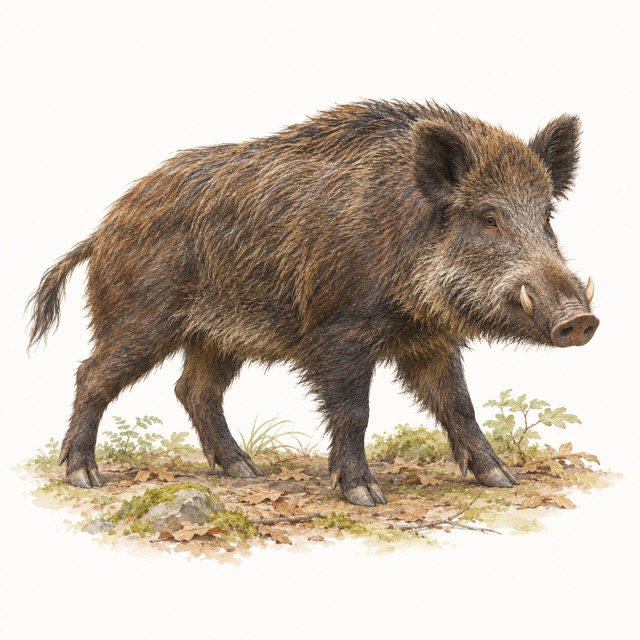 Wild boar Sus scrofa
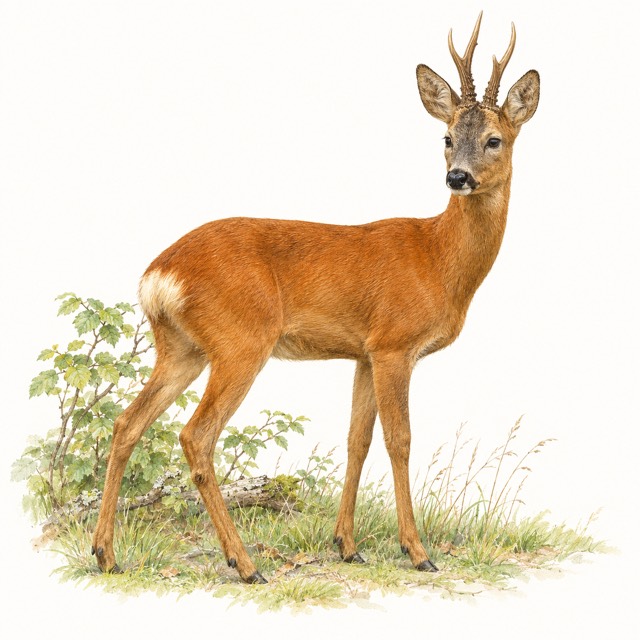 Roe deer Capreolus capreolus
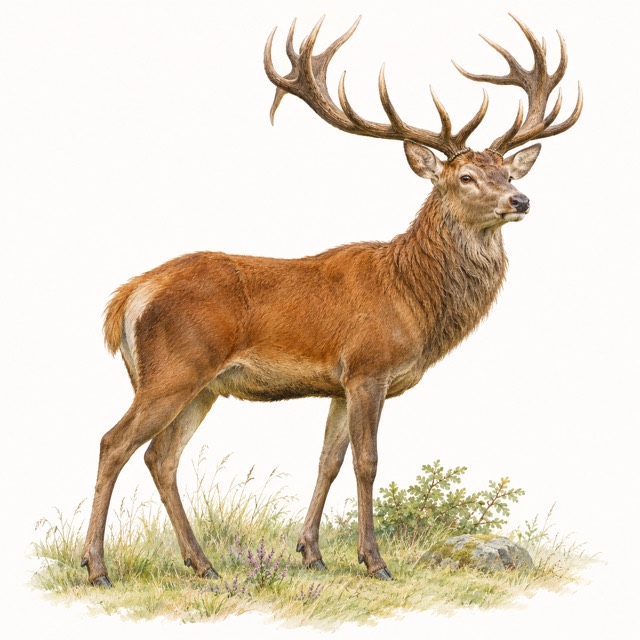 Red deer Cervus elaphus
The carnivores
The fox and the badger are the most familiar: the badger digs large setts and comes out at nightfall. The mustelid family, stone marten, pine marten, weasel, stoat and polecat, includes small, discreet hunters, often seen at dusk along hedges and ditches.
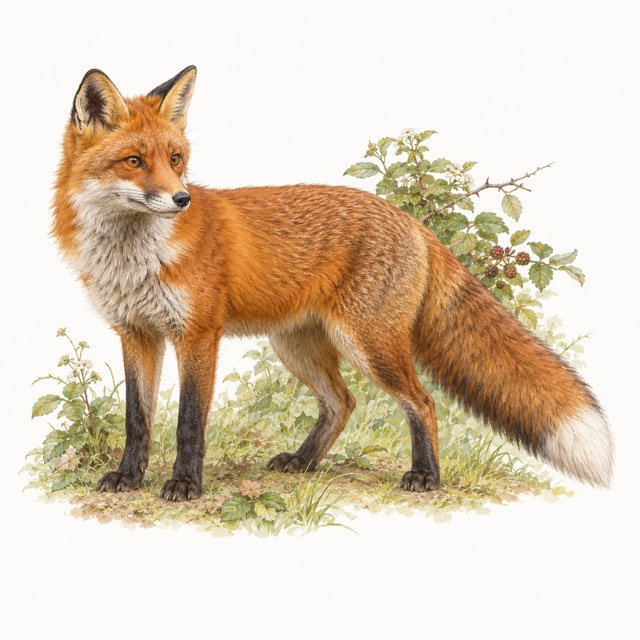 Red fox Vulpes vulpes
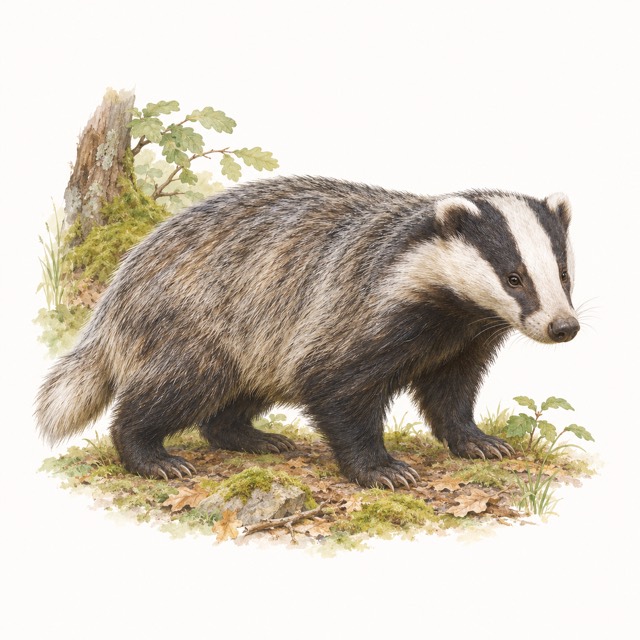 European badger Meles meles
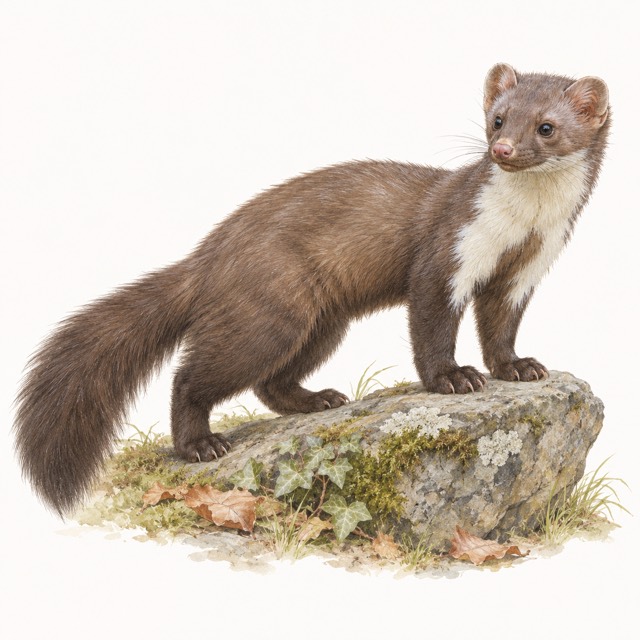 Stone marten Martes foina
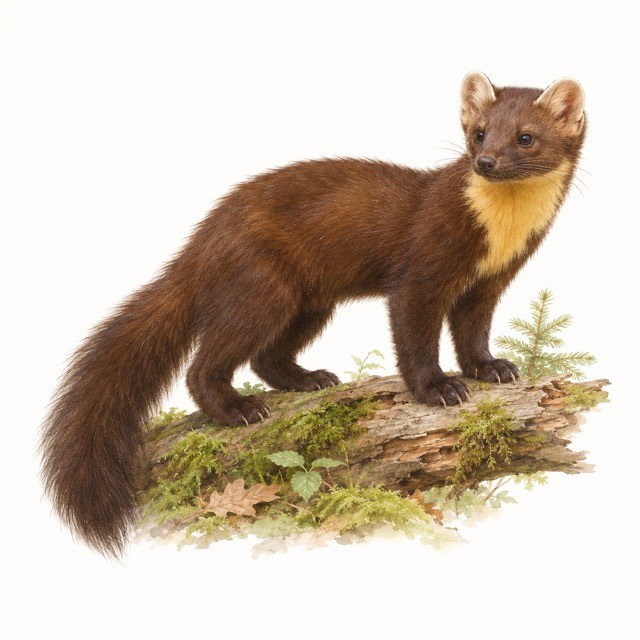 Pine marten Martes martes
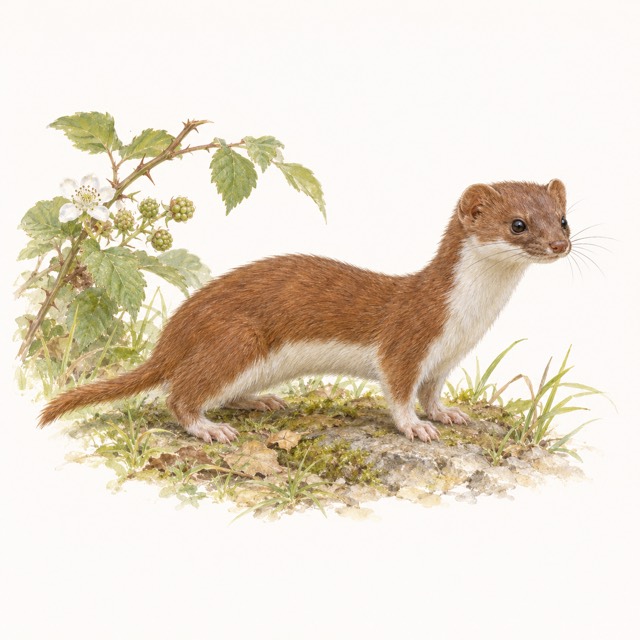 Least weasel Mustela nivalis
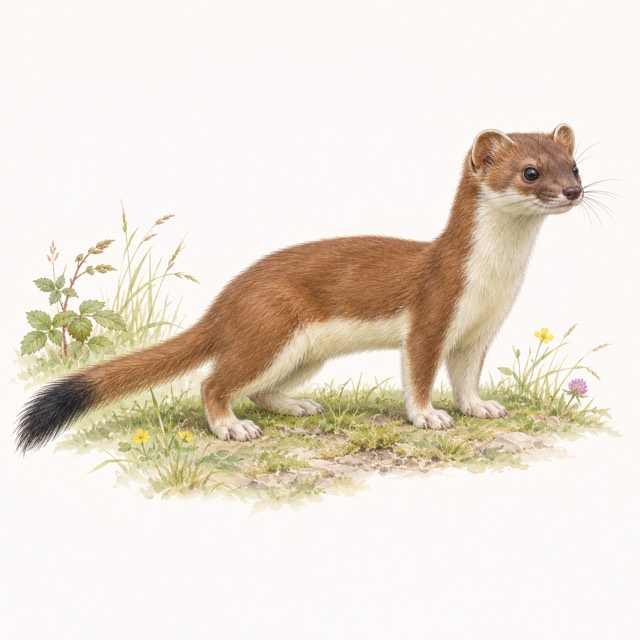 Stoat Mustela erminea
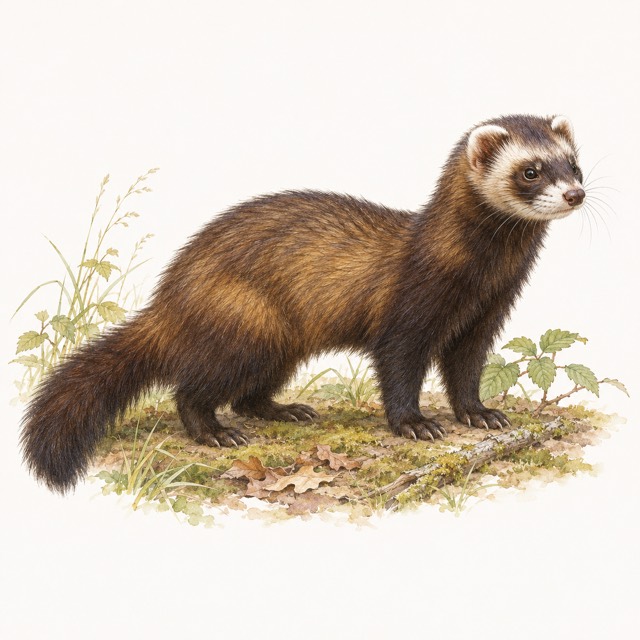 European polecat Mustela putorius
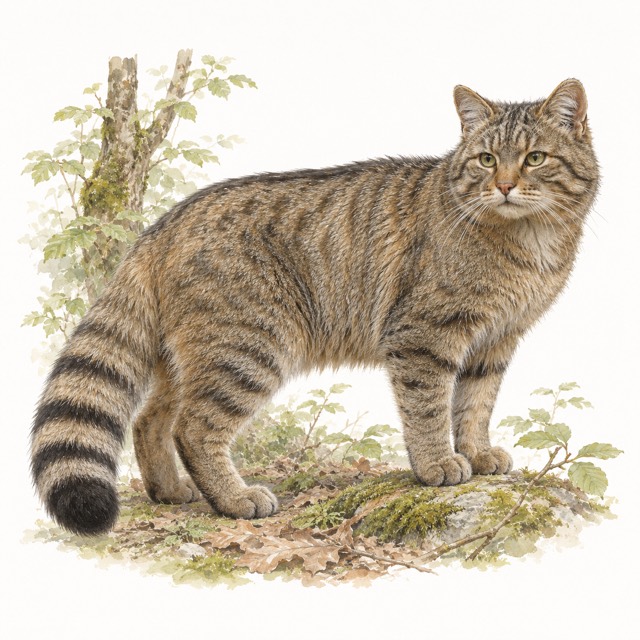 European wildcat Felis silvestris
The small mammals
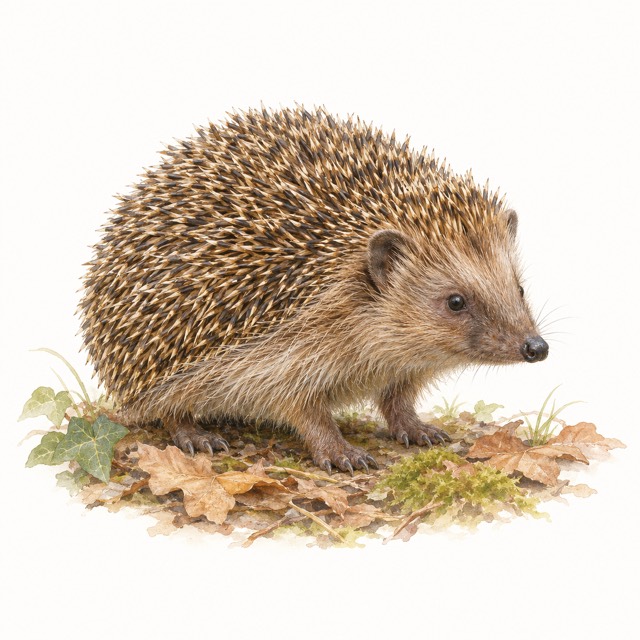 European hedgehog Erinaceus europaeus
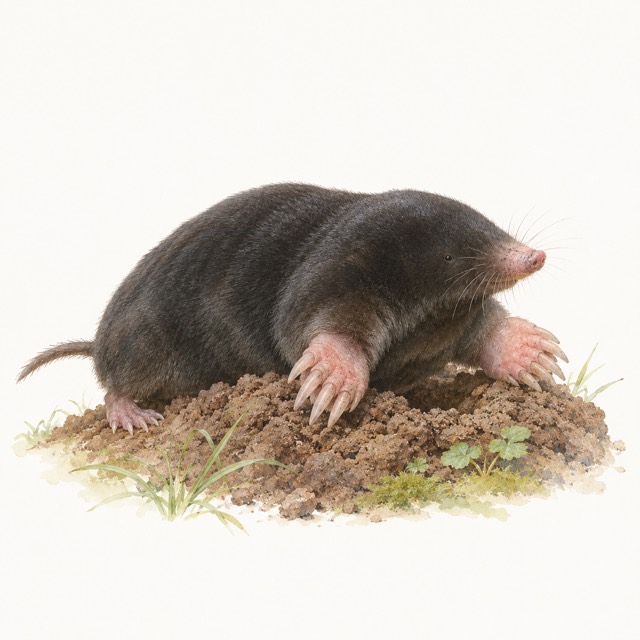 European mole Talpa europaea
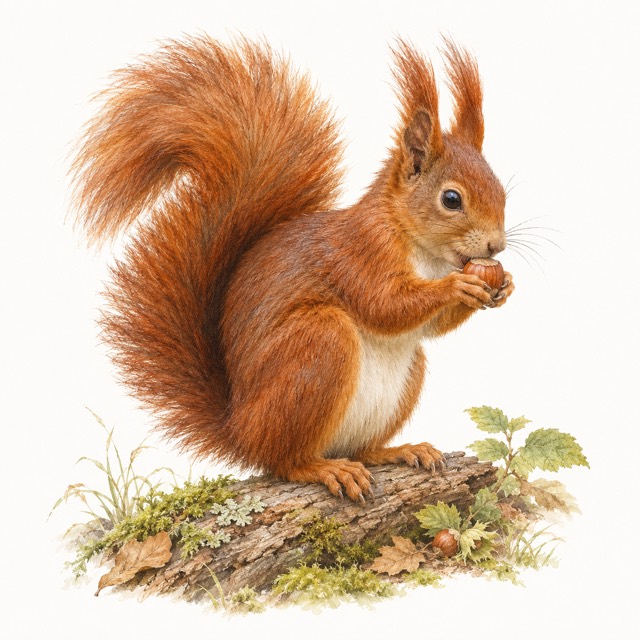 Red squirrel Sciurus vulgaris
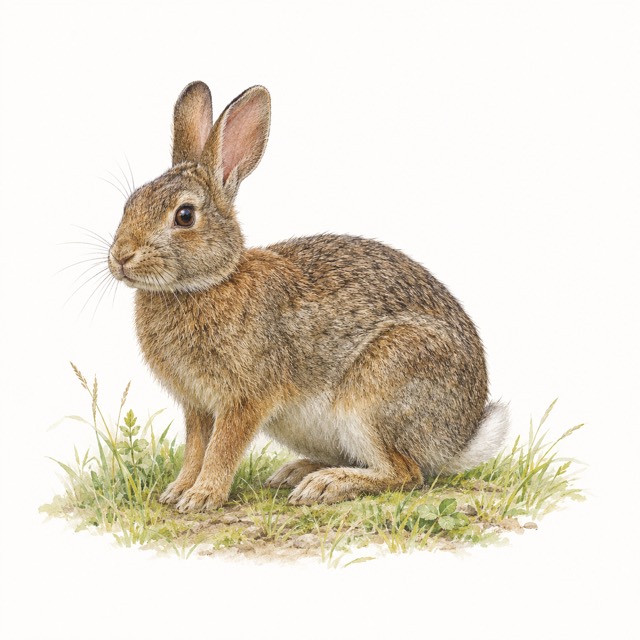 European rabbit Oryctolagus cuniculus
Picardy also has six species of shrew, which are rarely seen.
The bats
Eighteen bat species are recorded in Picardy. A few that you may hope to see in the evening, over the water or along woodland edges, are listed here; all are protected.
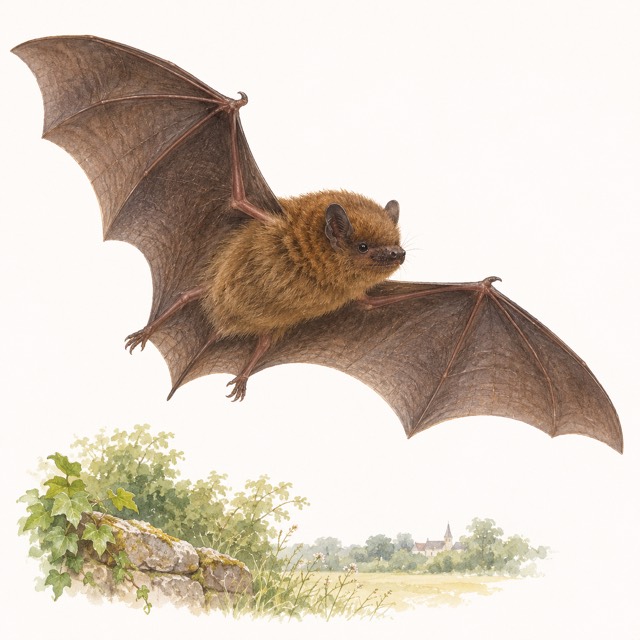 Common pipistrelle Pipistrellus pipistrellus
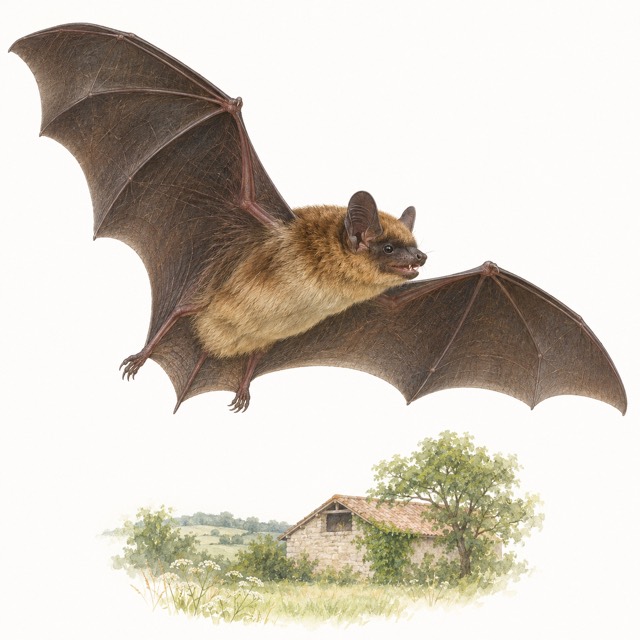 Serotine bat Eptesicus serotinus
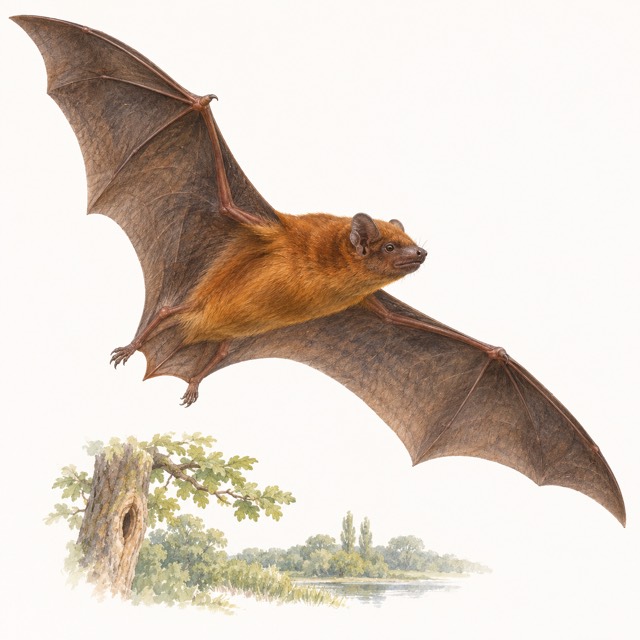 Common noctule Nyctalus noctula
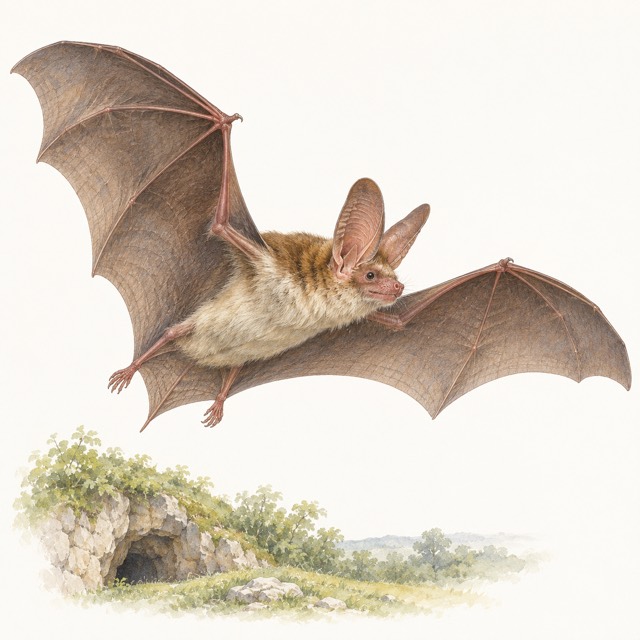 Greater mouse-eared bat Myotis myotis
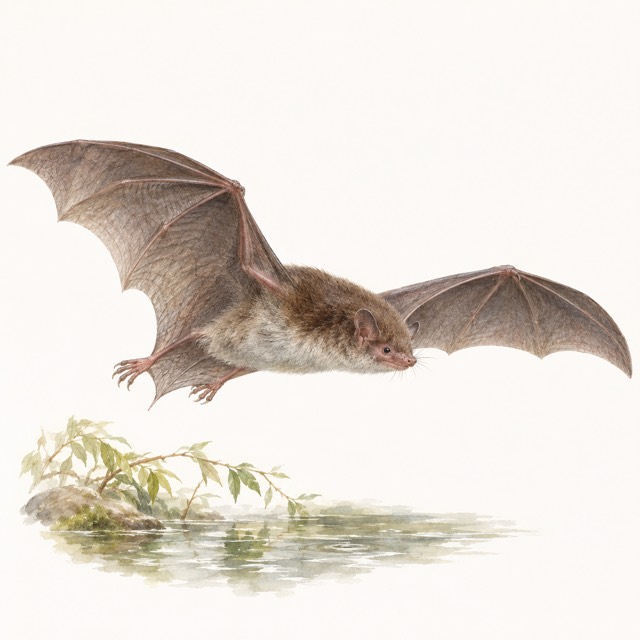 Daubenton's bat Myotis daubentonii
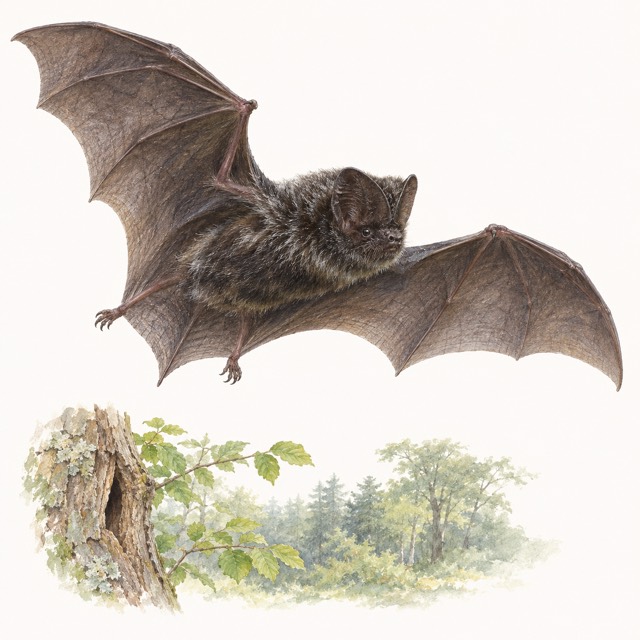 Western barbastelle Barbastella barbastellus
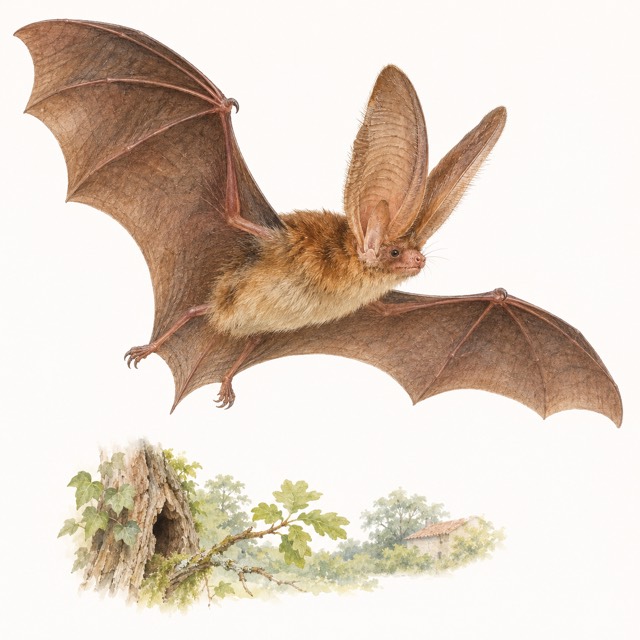 Brown long-eared bat Plecotus auritus
The otter is listed in Picardy among historical species, and the raccoon among introduced species. The species above are those mentioned in the regional list; their frequency in the commune is not documented.
Amphibians, reptiles and insects
Amphibians
Picardy has some fifteen amphibian species; the pools, ditches and ponds of the valley offer them places to spawn. Some are common, others rare or threatened.
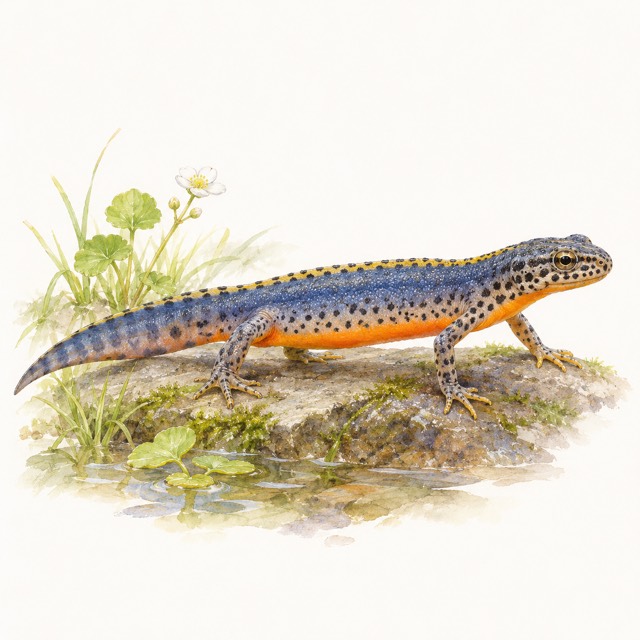 Alpine newt Ichthyosaura alpestris
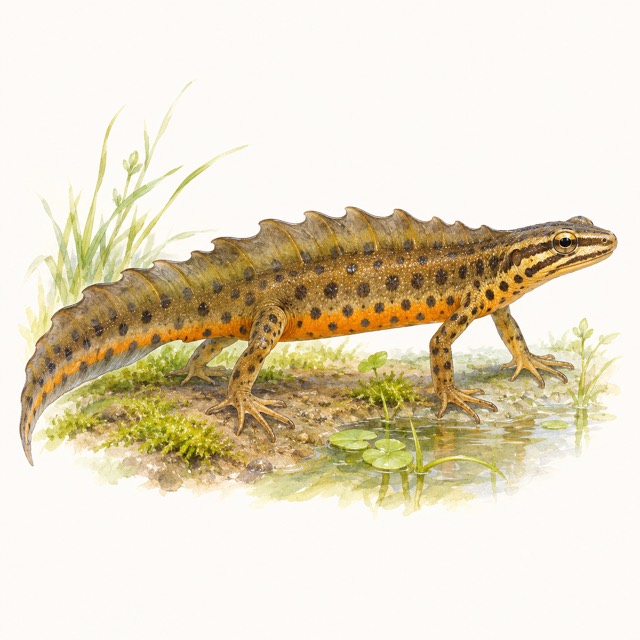 Smooth newt Lissotriton vulgaris
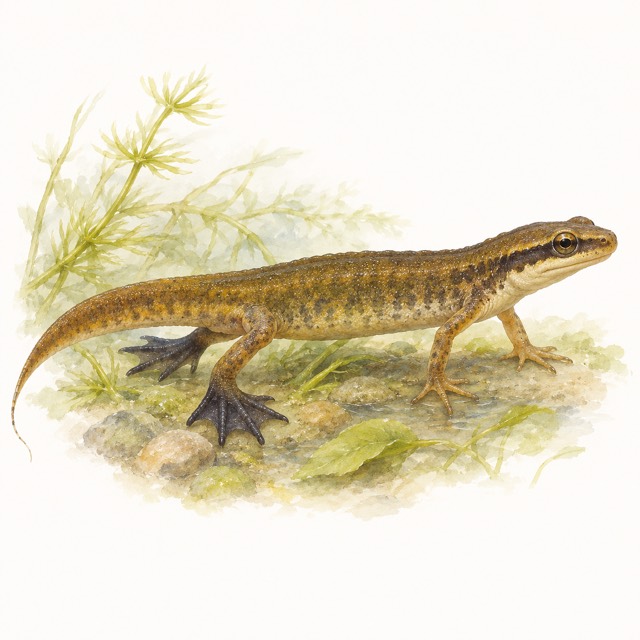 Palmate newt Lissotriton helveticus
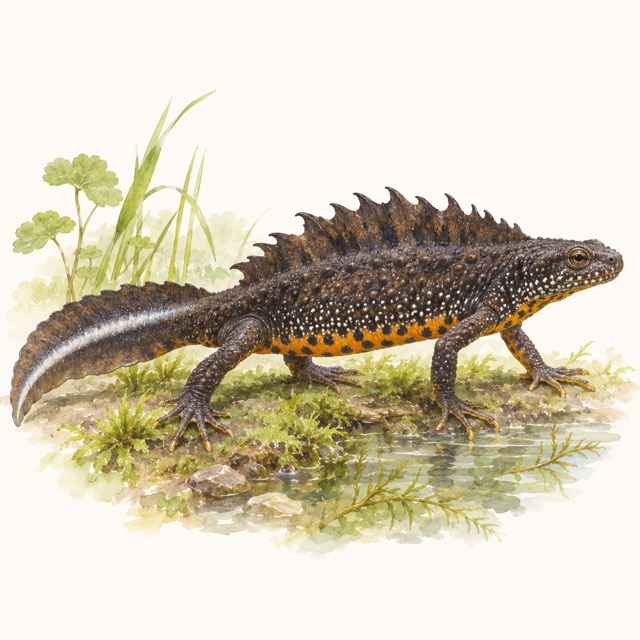 Great crested newt Triturus cristatus rare or threatened
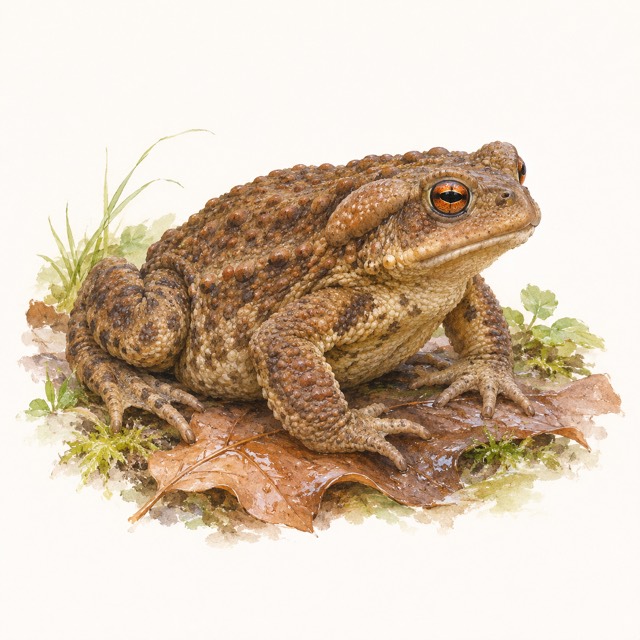 Common toad Bufo bufo common
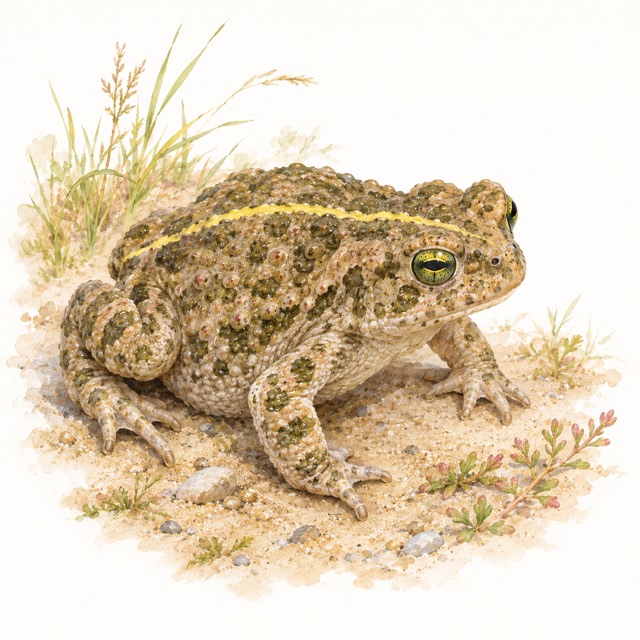 Natterjack toad Epidalea calamita rare or threatened
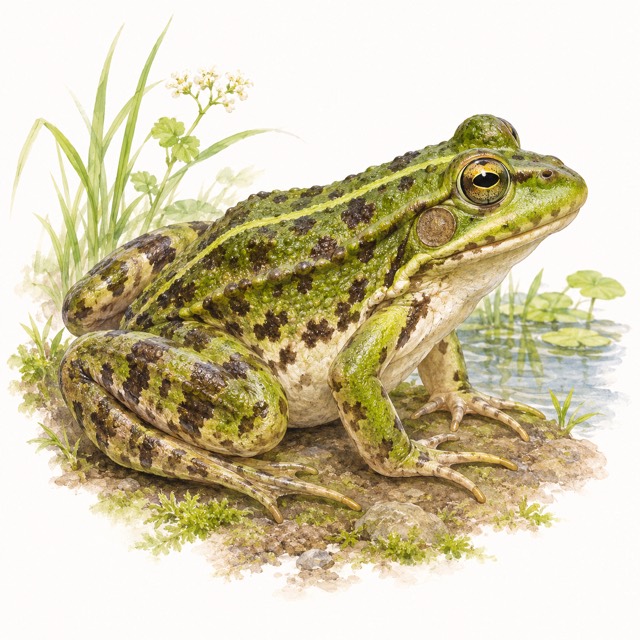 Edible frog Pelophylax kl. esculentus common
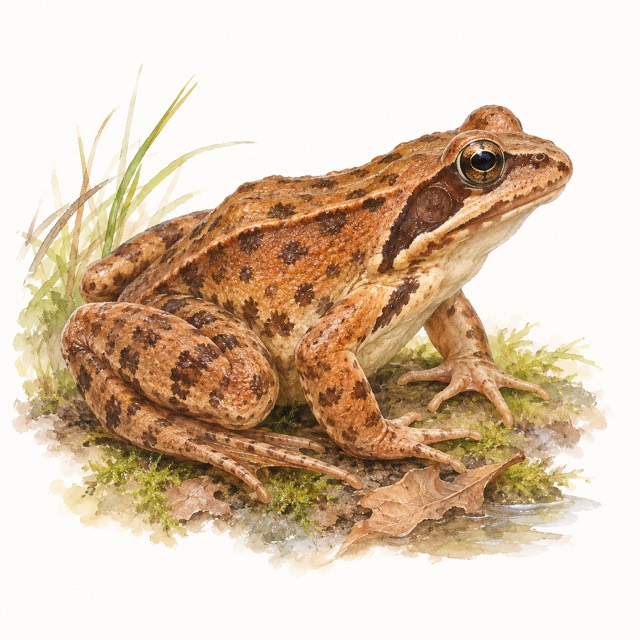 Common frog Rana temporaria common
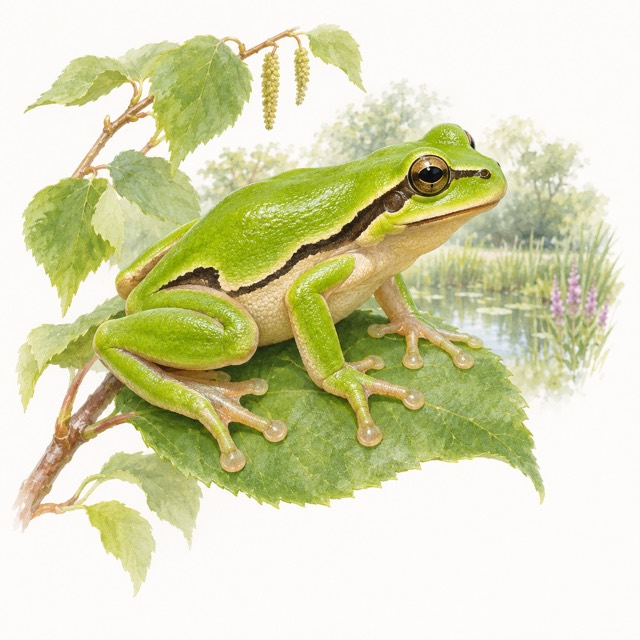 European tree frog Hyla arborea rare or threatened
Reptiles
Reptiles bask in the sun on banks, low walls and woodland edges. The adder, the only venomous snake of the region, is shy and avoids people; the grass snake, harmless, frequents water's edge. Red-eared sliders, abandoned by their owners, are increasingly present in Picardy's waters.
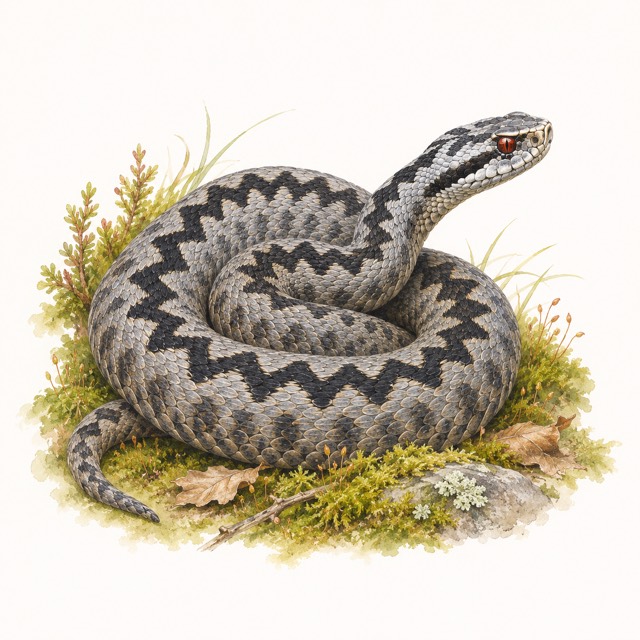 Common adder Vipera berus
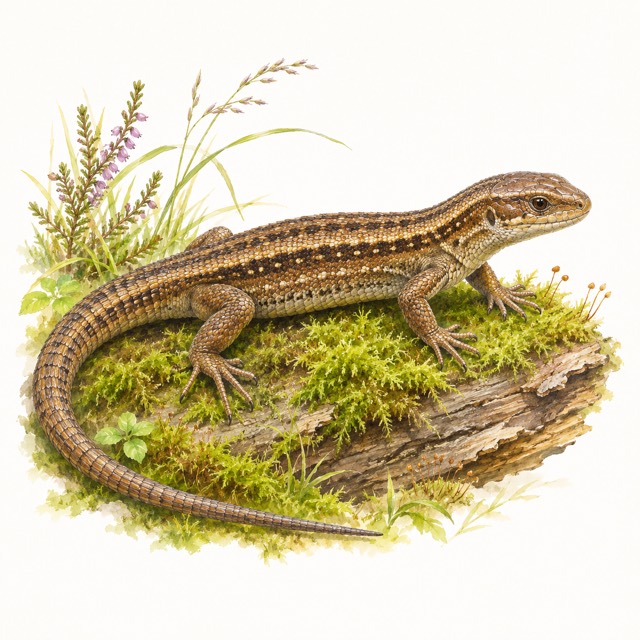 Viviparous lizard Zootoca vivipara
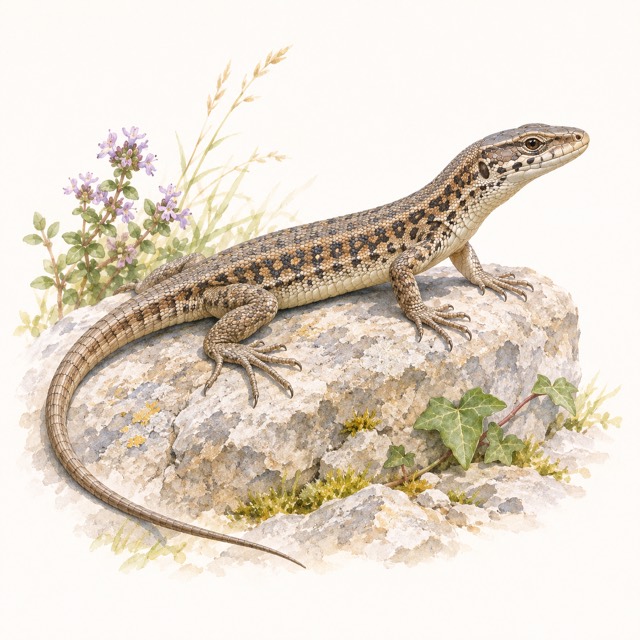 Common wall lizard Podarcis muralis
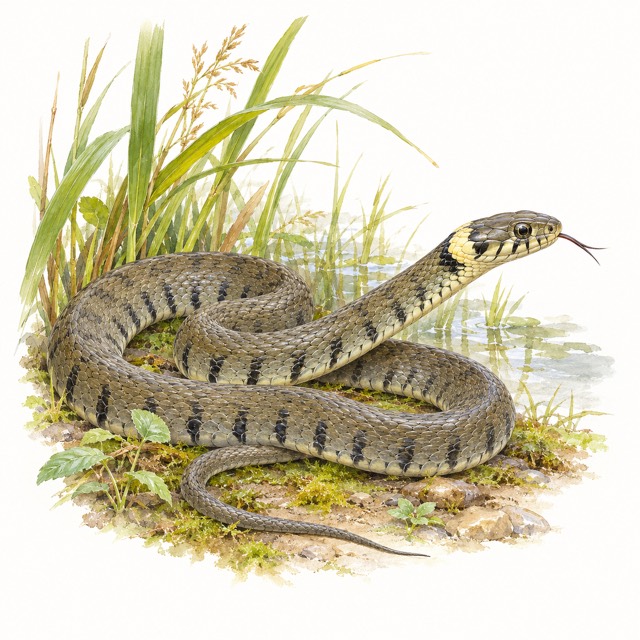 Barred grass snake Natrix helvetica
Insects
On the chalk grasslands, butterflies, crickets and grasshoppers enjoy the warmth of the chalk; the swallowtail is recorded there. In the marshes of the Haute Somme, the Natura 2000 site lists the orange-spotted emerald, a protected dragonfly, as well as three small molluscs of European interest.
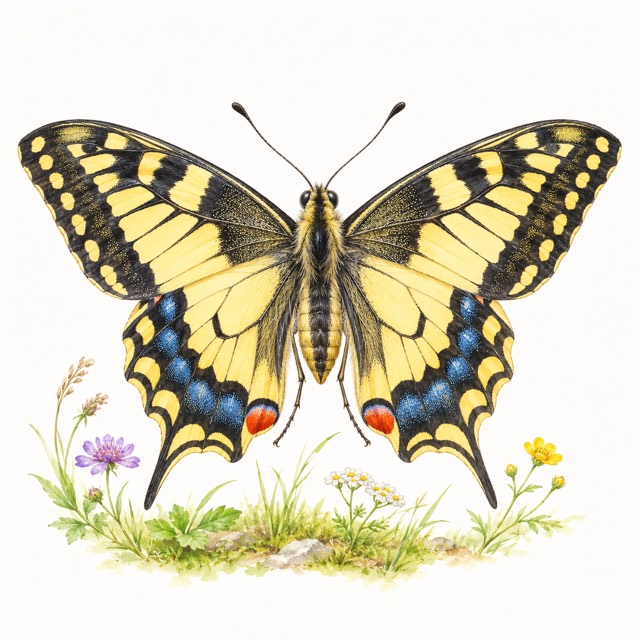 Swallowtail Papilio machaon
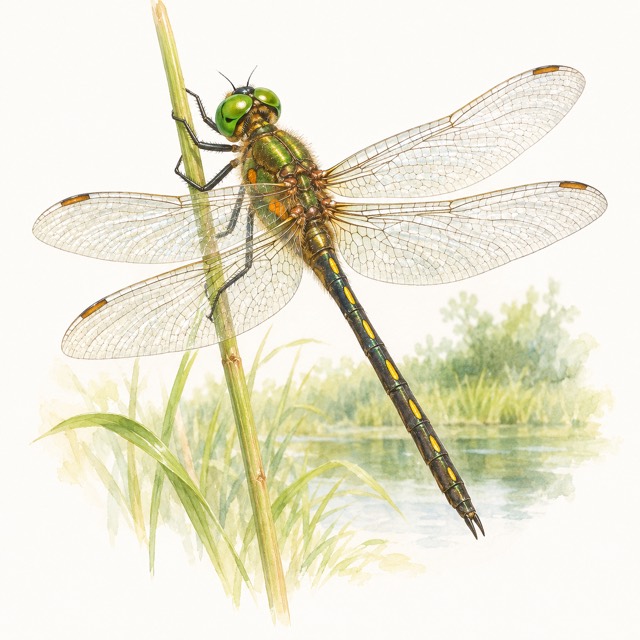 Orange-spotted emerald Oxygastra curtisii protected and monitored
The plants
Between the chalk grasslands and the fens, the Haute Somme shelters plants found almost nowhere else in northern France.
The chalk grasslands: orchids and sun-lovers
The Frise and Vaux hills are among the last chalk grasslands of the Haute Somme. These chalk pastures, grazed until the 1950s, became wooded after the flocks were abandoned. The Picardy Natural Spaces Conservatory has managed the Vaux hill (11 hectares, a ZNIEFF-listed site) since 1995 and has had goats grazing there since 1997; at Frise, a restoration plan with sheep and goat grazing keeps the scrub in check. In spring the grassland is covered in orchids, including bee orchid, fly orchid and lady orchid, with pasqueflower and common rock-rose.
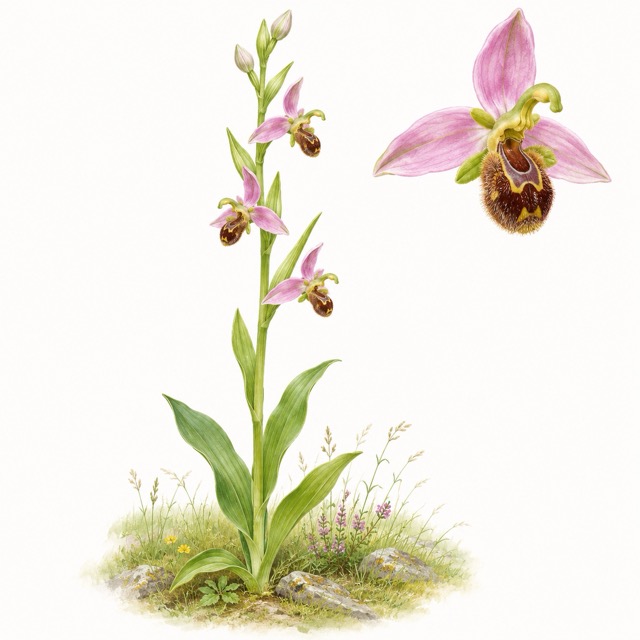 Bee orchid Ophrys apifera recorded at Frise
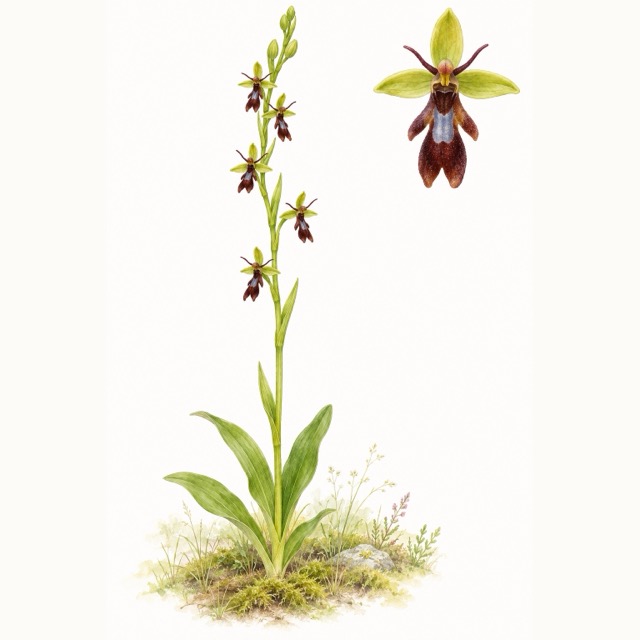 Fly orchid Ophrys insectifera recorded at Frise
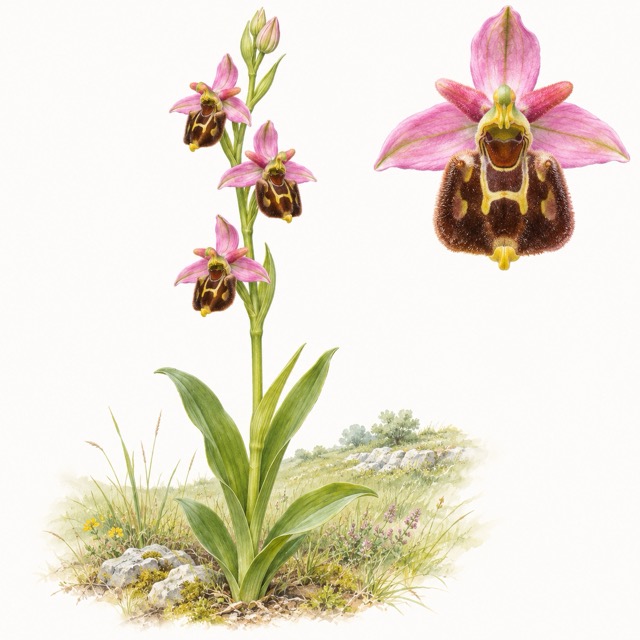 Late spider orchid Ophrys fuciflora
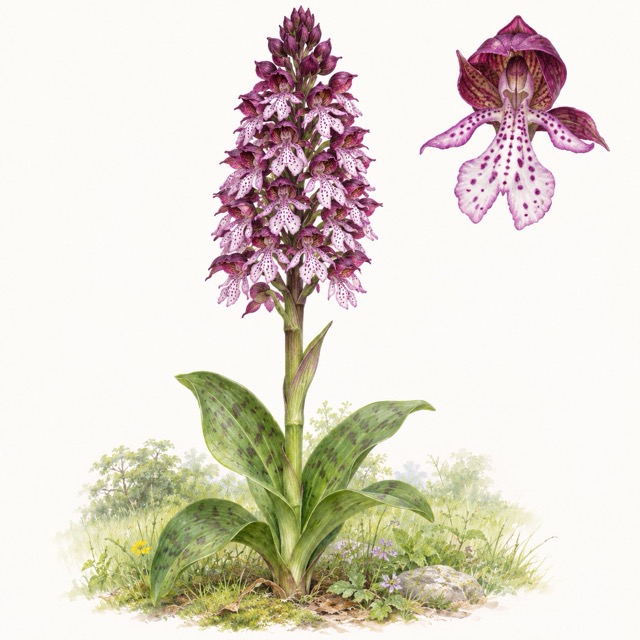 Lady orchid Orchis purpurea recorded at Frise
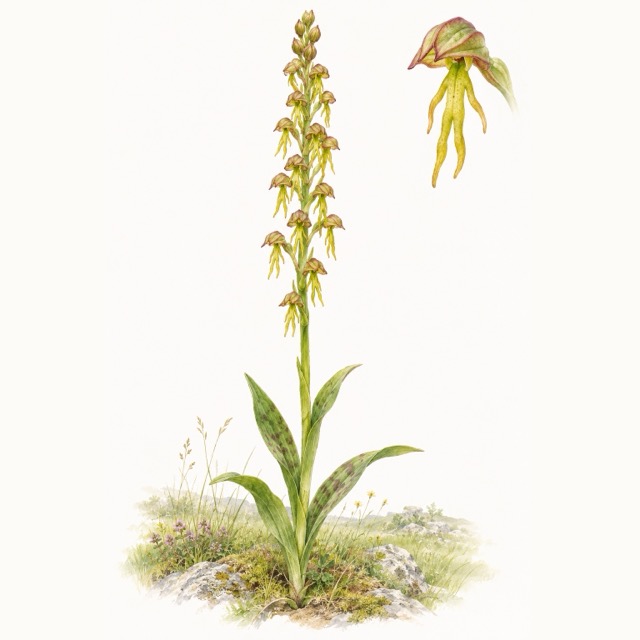 Man orchid Orchis anthropophora
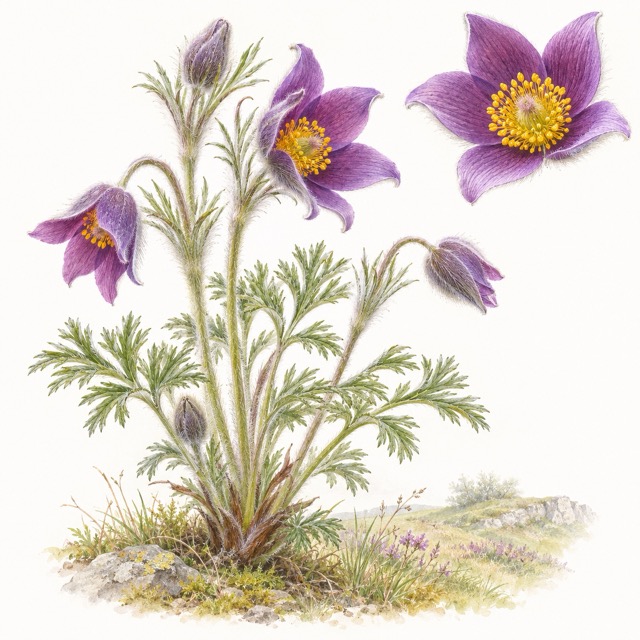 Pasqueflower Pulsatilla vulgaris northern limit of its range in France
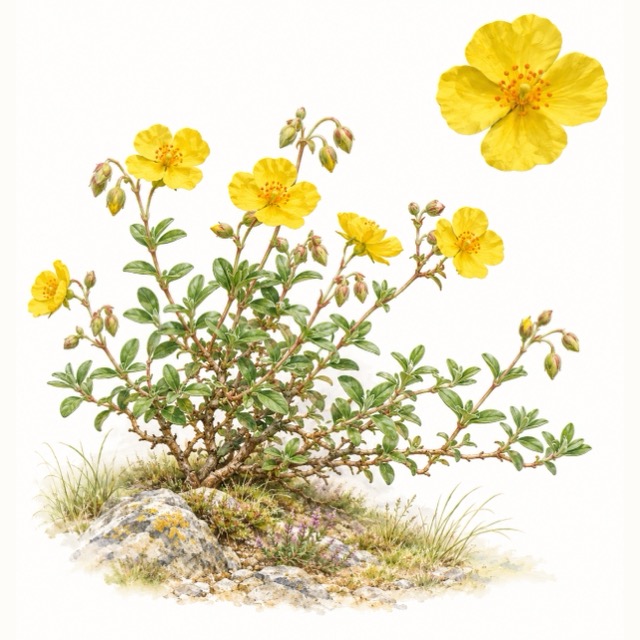 Common rock-rose Helianthemum nummularium
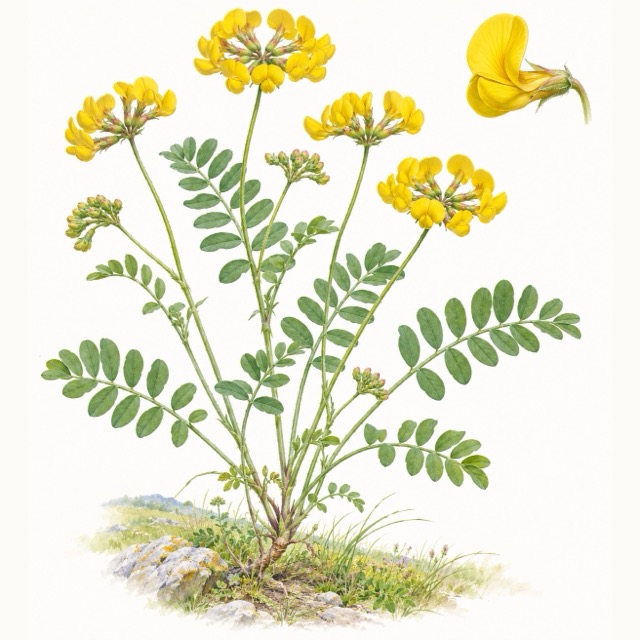 Horseshoe vetch Hippocrepis comosa
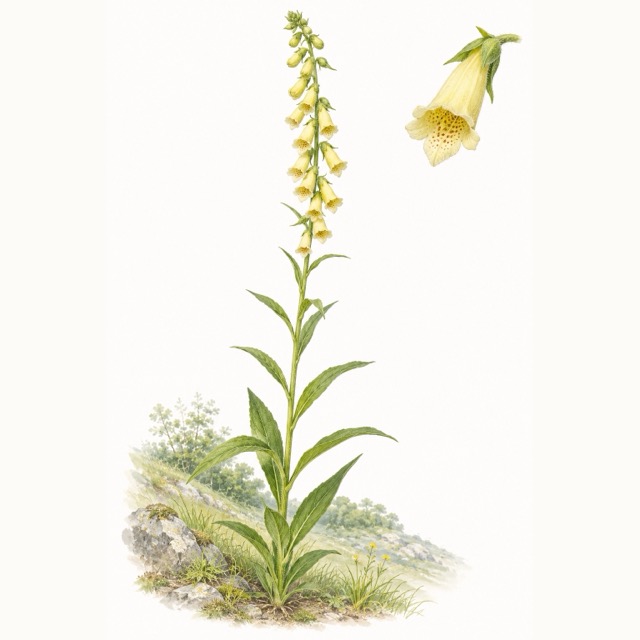 Straw foxglove Digitalis lutea
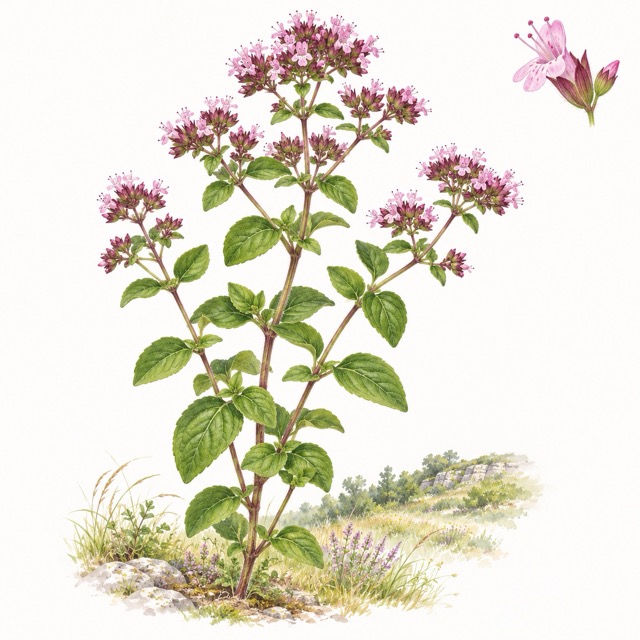 Wild marjoram Origanum vulgare
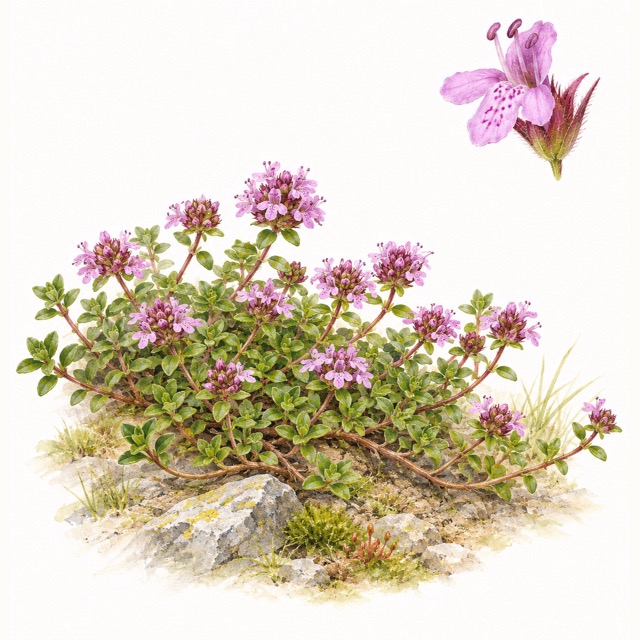 Wild thyme Thymus serpyllum
According to Picardie Nature, the Somme valley is the northern limit of the pasqueflower's range in France. The national botanical conservatory organises outings to discover the orchids of the Frise grassland, in May.
The fens: the valley's rarities
On the valley floor, alkaline fens form one of the largest complexes of their kind in western Europe. They shelter extremely rare plants: Loesel's twayblade (fen orchid), a tiny orchid that has become the flagship species of the site, the crested buckler-fern, very rare in Hauts-de-France, and the bog orchid, recorded in the marshes between Bray and Étinehem in 1916. The great fen-sedge, a tall, sharp-edged plant, dominates some marshes. On the Natura 2000 site of the middle valley, alkaline fens cover nearly 128 hectares, 7% of the site, and alder-ash woods 88 hectares.
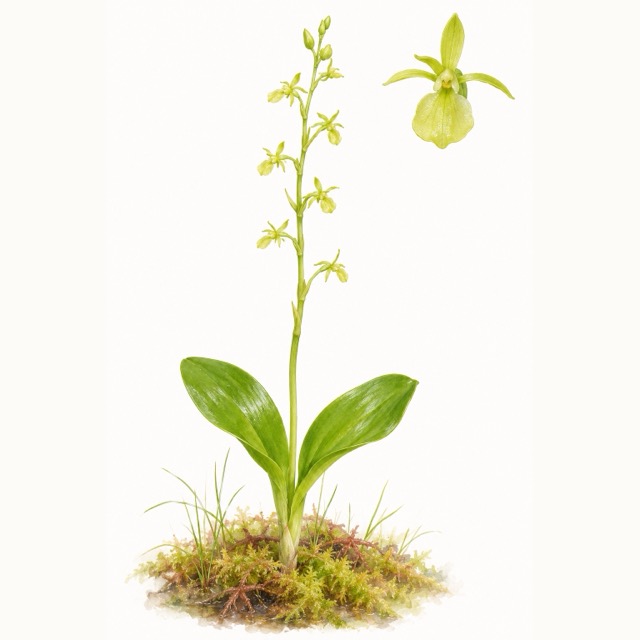 Fen orchid Liparis loeselii flagship species of the valley
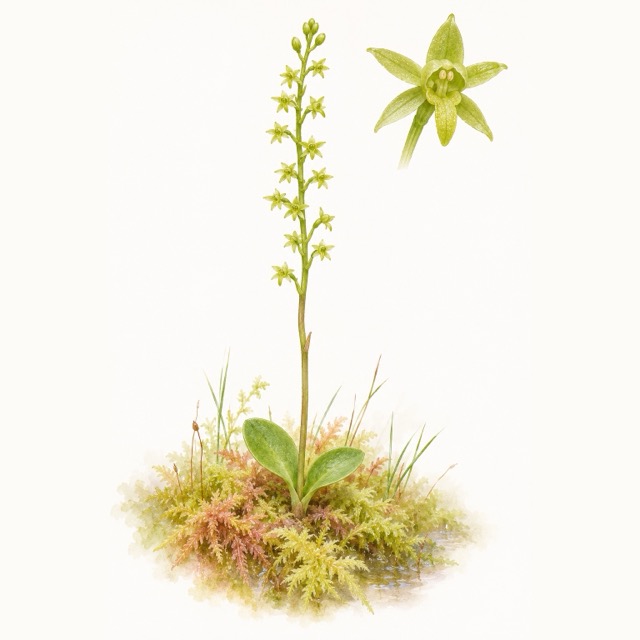 Bog orchid Hammarbya paludosa historical species
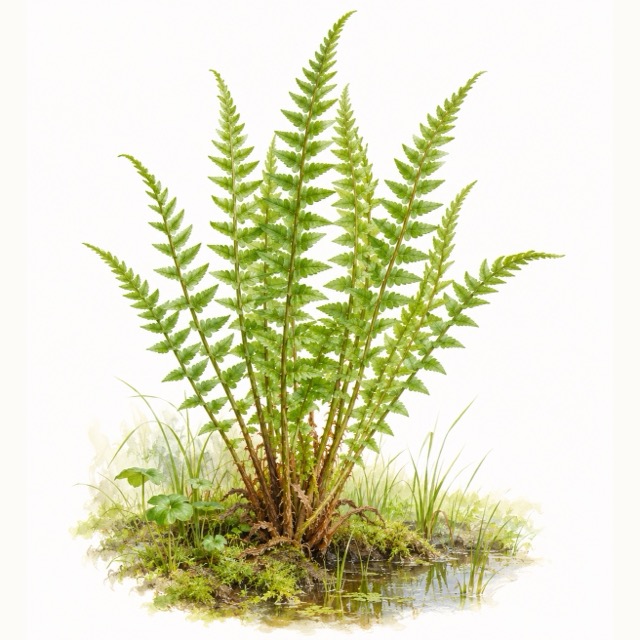 Crested buckler-fern Dryopteris cristata very rare in Hauts-de-France
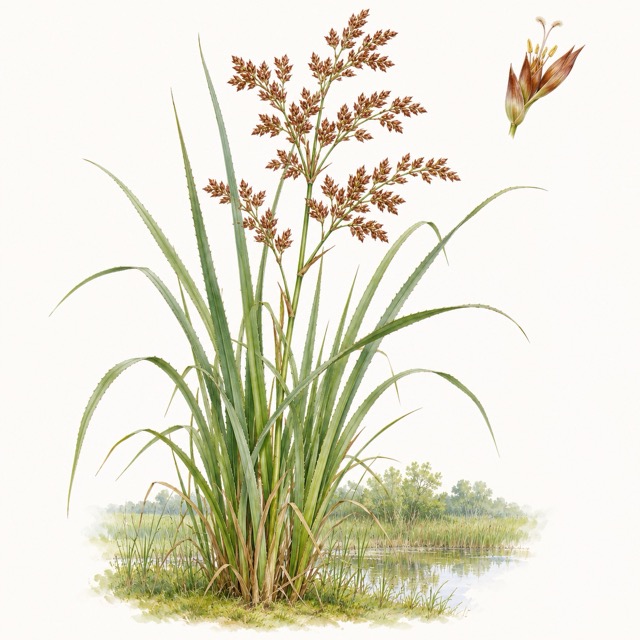 Great fen-sedge Cladium mariscus
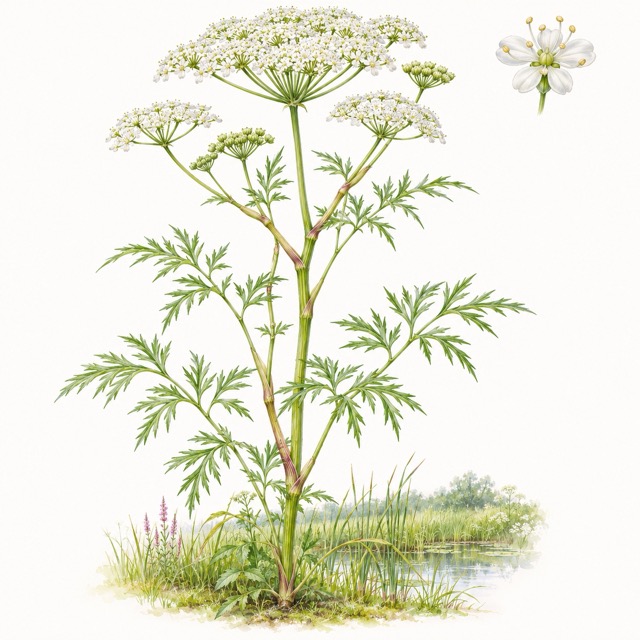 Marsh hog's fennel Peucedanum palustre
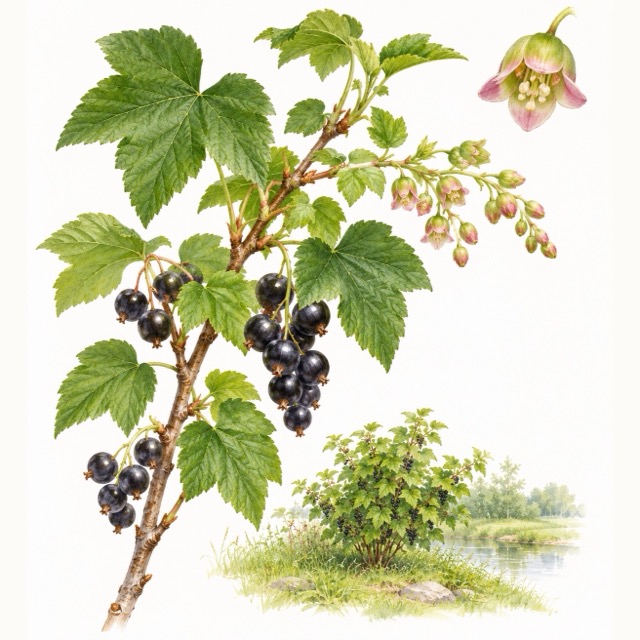 Blackcurrant Ribes nigrum
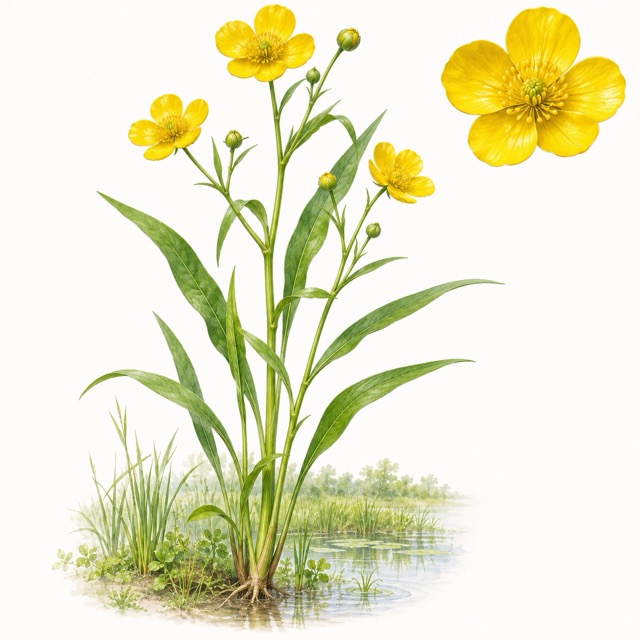 Greater spearwort Ranunculus lingua
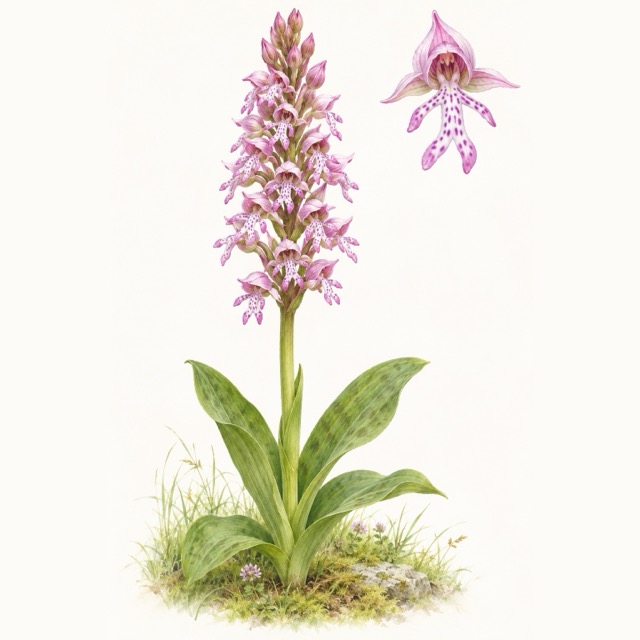 Military orchid Orchis militaris
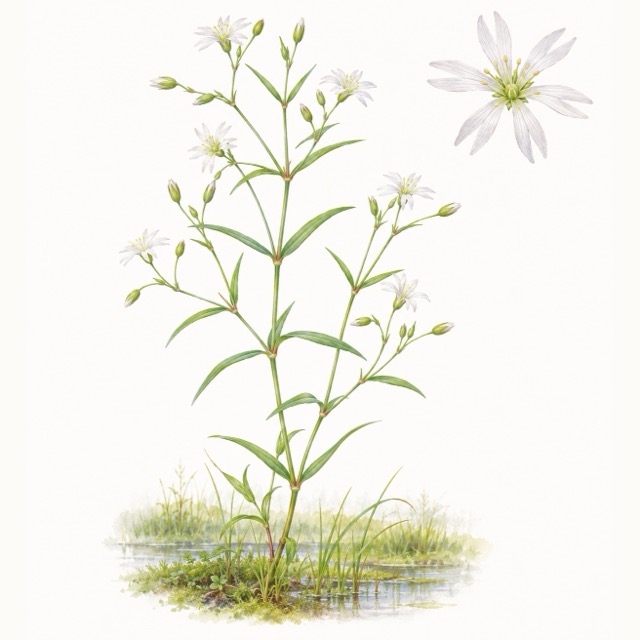 Marsh stitchwort Stellaria palustris
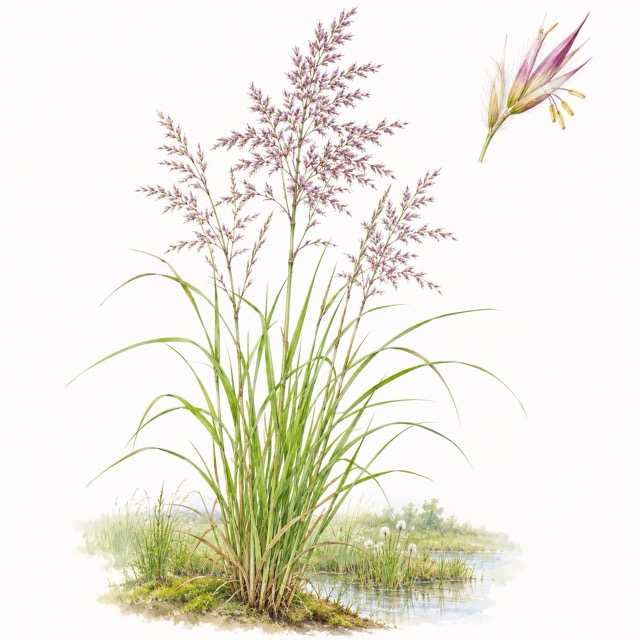 Purple small-reed Calamagrostis canescens
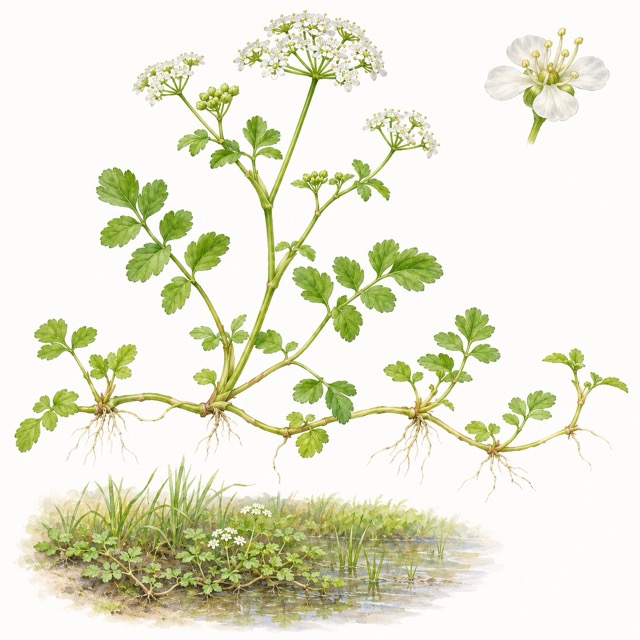 Creeping marshwort Helosciadium repens
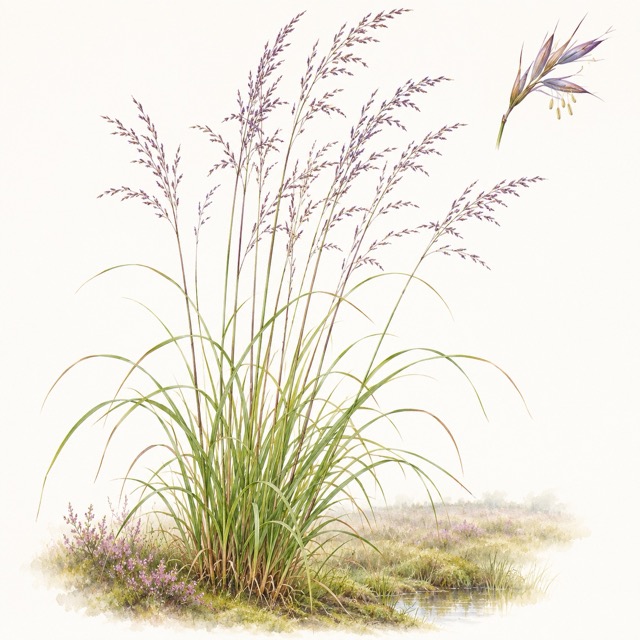 Purple moor-grass Molinia caerulea
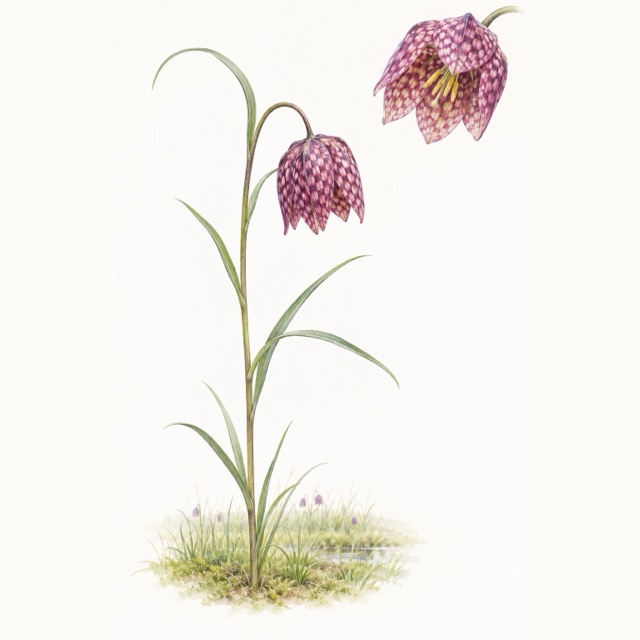 Snake's-head fritillary Fritillaria meleagris
Some of these species are recorded mostly further downstream, towards Abbeville and Corbie, or for the Somme and Avre valleys as a whole: their exact presence around Frise and Cappy remains to be confirmed in the field.
On the plateau
On the plateau, wild flora takes refuge along field edges, tracks and banks. The poppy, symbol of the "Poppy Country" in the Haute Somme, is its best-known image. We will describe it in detail with residents' records.
A changing nature
At Frise, a text from 1899 recalls highly prized crayfish that once filled the ponds and had "completely disappeared" some forty years earlier. It also mentions a floating plant called "mouron" in the local dialect, which was gathered to fertilise the fields.
Today the threats are of a different kind: only 5% of the chalk grasslands of the early 20th century remain in Picardy, harrier nests are cut at harvest, the European eel is a species threatened with extinction, and red-eared sliders and raccoons are settling in. The Department and the conservatories restore the grasslands by grazing, and the European LIFE Anthropofens programme aims to restore more than 22 hectares of alkaline fens, notably at Cappy, Éclusier-Vaux and Morcourt.
To learn more about fish and the eel, see the Fishing and boating page.
Have you seen a bird, a flower, an animal?
This page is meant to become a true atlas of the village: species observed at Dompierre, at Becquincourt, at the Frise viewpoint, with the date and, if possible, a photograph. Write to us and we will add them, with your name if you wish.
Sources
- Somme Department: the Cléry-sur-Somme ponds
- Somme Department: the viewpoints
- Wikipedia: Fauna of Picardy
- List of the birds of Picardy
- Wikipedia: Montagne d'Éclusier-Vaux
- National botanical conservatory: the orchids of the Frise grassland
- LIFE Anthropofens: Middle Somme valley
- Picardie Nature: protecting harriers