The Somme in their veins
A few kilometres from the plateau, the valley of the ponds: angling, eel traps, the canal and its kayaks. A tradition the people of Dompierre are happy to share.
The river is never far
Dompierre-Becquincourt is a plateau village, but the Somme valley is only a few kilometres away. From the Frise and Vaux viewpoints, you can see all of it.
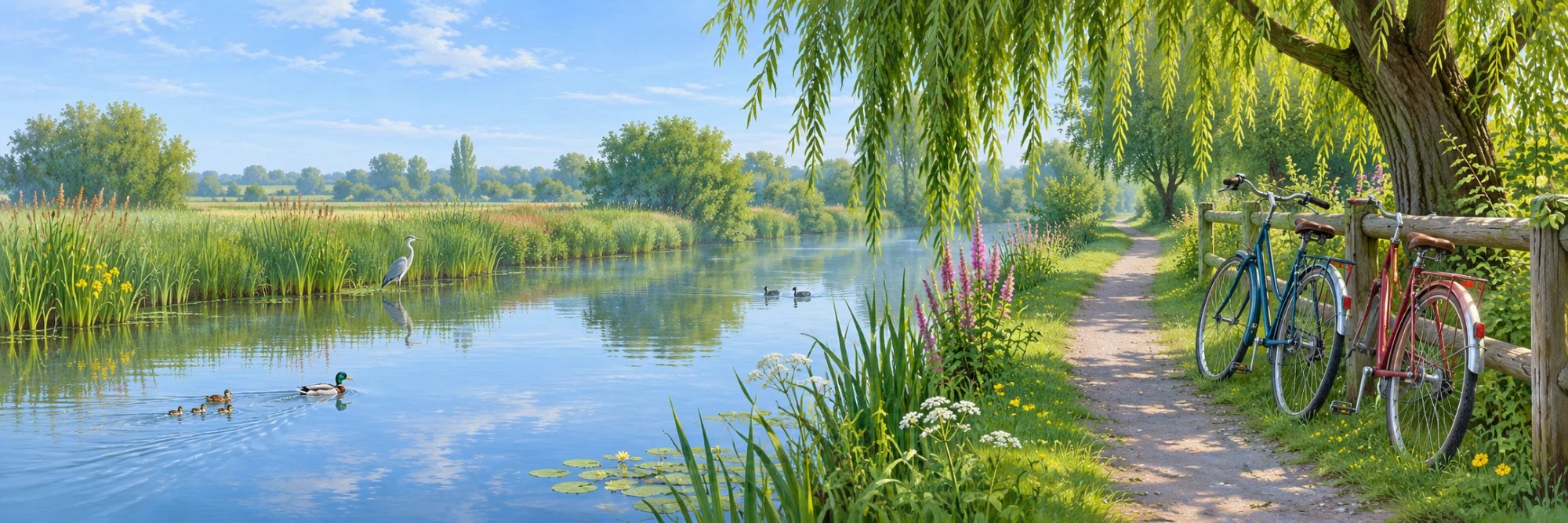
The river winds between ponds, reed beds and poplars, and you understand at a glance why fishing is a family affair here. Many people in Dompierre learned to hold a rod beside the canal, a lock or a pond, on a Sunday morning. They like to say the Somme runs in their veins: it is not only a figure of speech.
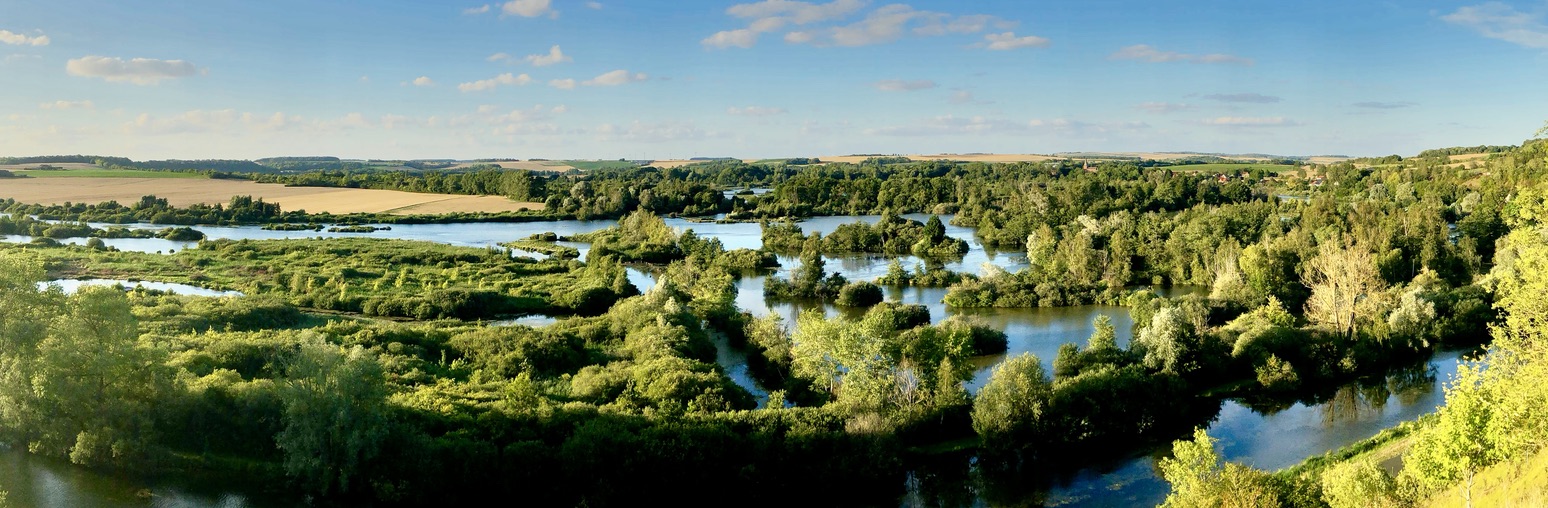
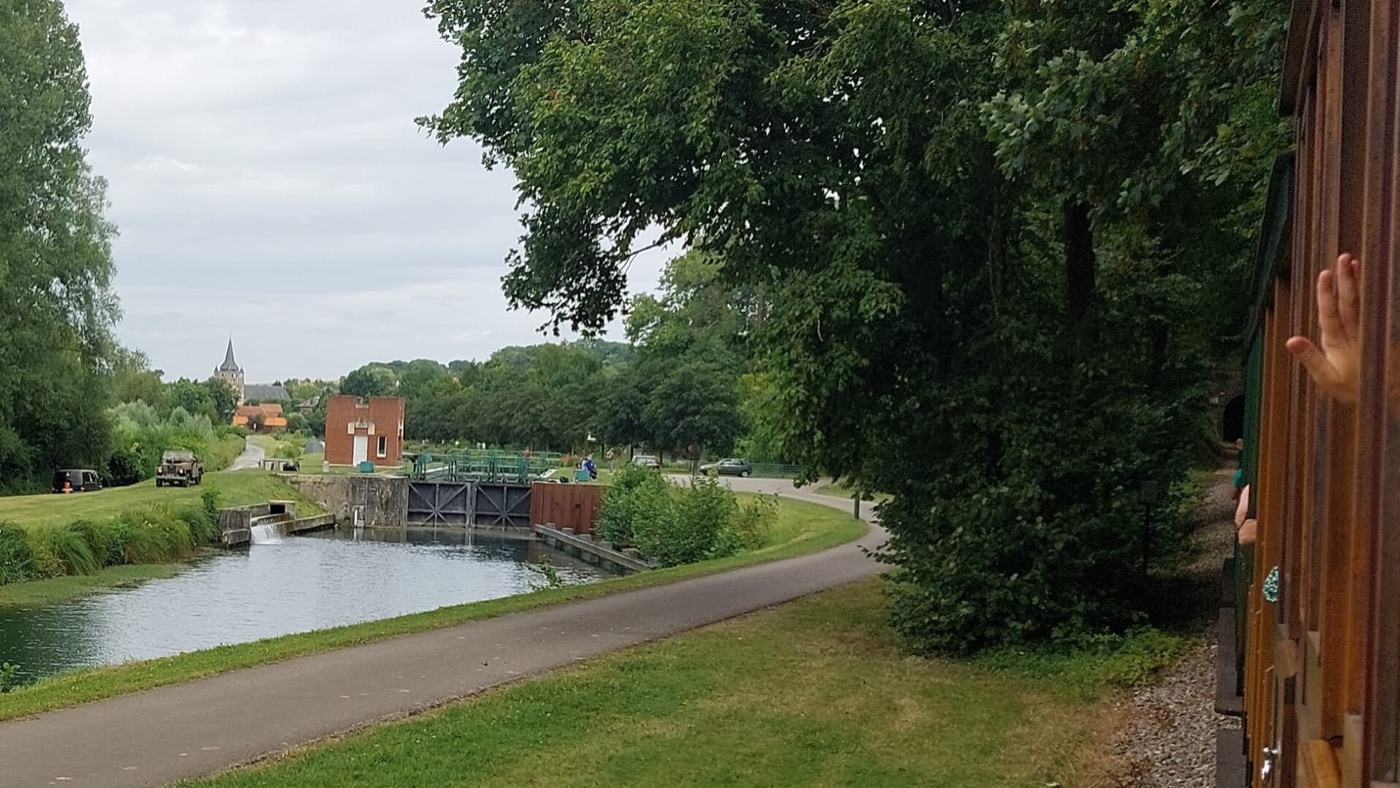
The village has always looked towards Cappy, Frise and Éclusier-Vaux. The little steam train linking Froissy and Cappy to Dompierre, a legacy of the 1914-1918 war, bears witness to it: the whole story of the P'tit train.
The eel traps
In the valley, eels have been fished since the Middle Ages, and the eel trap is the most surprising device for it.
The eel trap (anguillère) is a large wooden fish trap, fitted with grilles and sluice gates, set in the current. Eels travel downriver at night and are caught in the trap without the fisherman needing to be there. The fish was then often smoked over a wood fire with beech sawdust, a speciality still found in the valley (see the Picardy flavours).
The eel traps are not the only works of men in this valley. The ponds themselves are old peat diggings: peat was extracted from the 12th century until after the Second World War, and the pits filled with water. They are called "entailles" or "clairs".
When people paid in eels
In the Middle Ages, the eel serves as currency. Lords give eels to monasteries and demand them from their subjects: these are rents and dues paid in kind, counted by the hundred, by the thousand. A few examples from the valley:
- 1100
2,200 eels for Abbeville
The Count of Ponthieu gives the monks of the priory of Saint-Pierre in Abbeville 2,200 eels to be taken each year from the fisheries of the Somme.
- 1137
800 eels a year
Gérard de Picquigny founds the abbey of Le Gard and gives it an annual rent of 800 eels, taken from the lock at Hangest.
- 1159
About a hundred eels
The monks of Saint-Acheul, in Amiens, receive about a hundred eels each year from the lock at Ravine.
- 1176 – 1177
Thousands of eels
The nuns of Berteaucourt-les-Dames have two annual rents of 500 eels confirmed, and a due of two thousand eels is levied on the waters of the Étoile.
- 1449
13,000 eels in arrears
The lord of Hangest acknowledges owing 13,000 eels in arrears to the abbey of Le Gard. He owed 2,000 a year: the rent was no longer being paid.
The resource is running out: from the end of the 12th century, overfishing seems to weaken it, and the rents fall sharply in the 14th century. The rents owed to lords do not tell us how many eels were actually caught.
As for eel traps proper, these fixed traps are attested only on the upper Somme, from the middle of the 16th century.
Visiting an eel trap
At Éclusier-Vaux, the eel trap has been restored by the Somme Department. It is part of the site laid out at the foot of the Vaux viewpoint and is now used for the scientific monitoring of eels, with the Artois-Picardie Water Agency and the Somme Fishing Federation. It is a natural stop on the loop of the two viewpoints: see the page Around the village. As access conditions may change, ask the Haute-Somme tourist office before you go.
The fish of the valley
The calm waters of the Somme, its ponds and its canal are home to a good variety of fish.
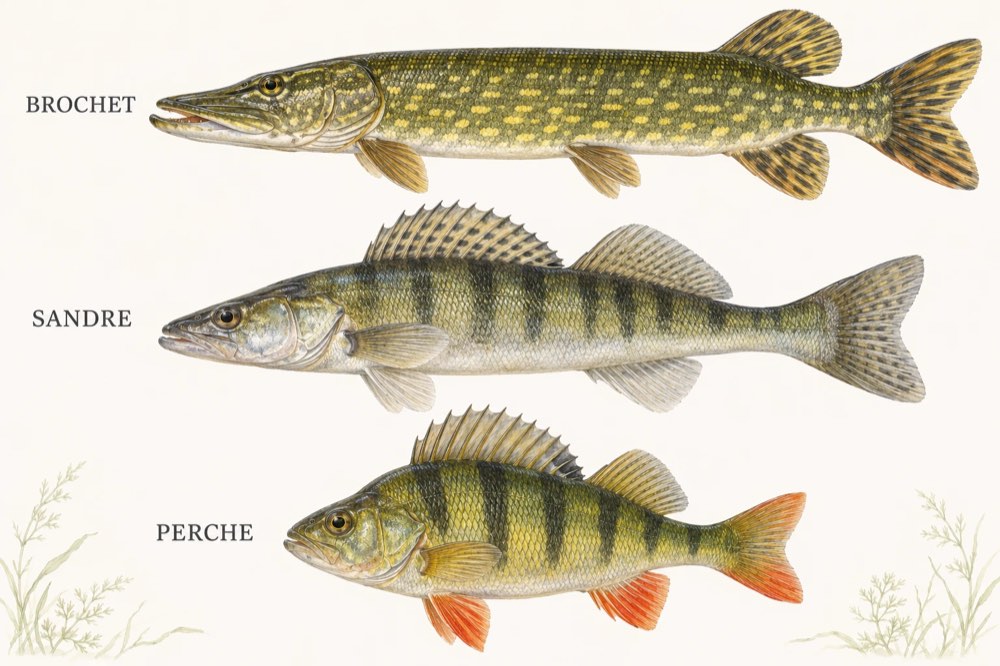
Pike, zander, perch
The predators of the valley, fished with lures or live bait. The pike is the king of the ponds.
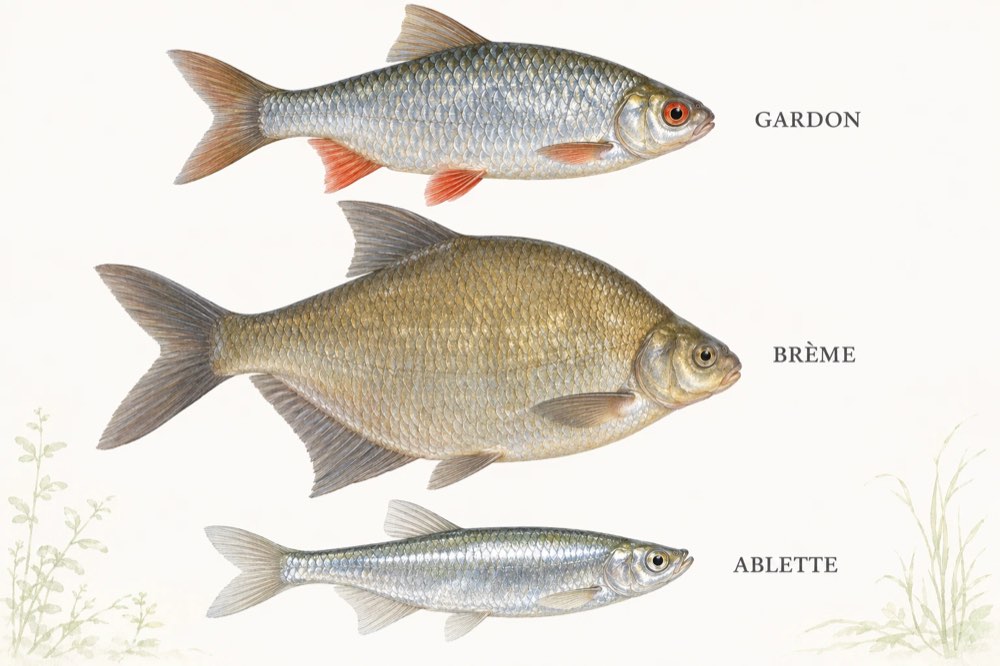
Roach, bream, bleak
The fish of quiet angling, with a rod, for beginners and regulars alike.
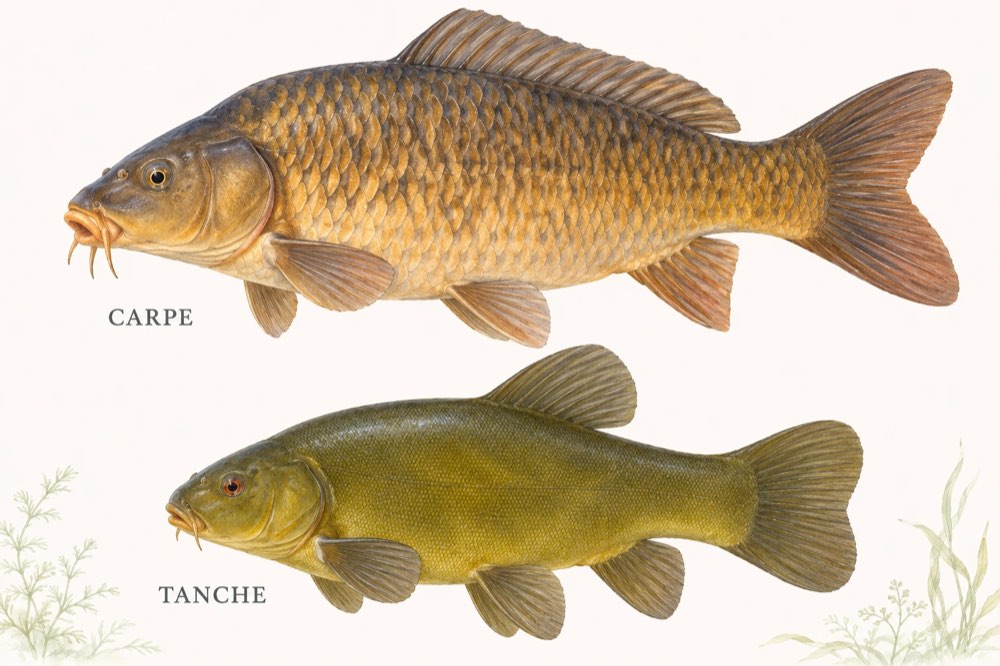
Carp and tench
They like slow waters and muddy bottoms: the ponds and the canal backwaters are their home.
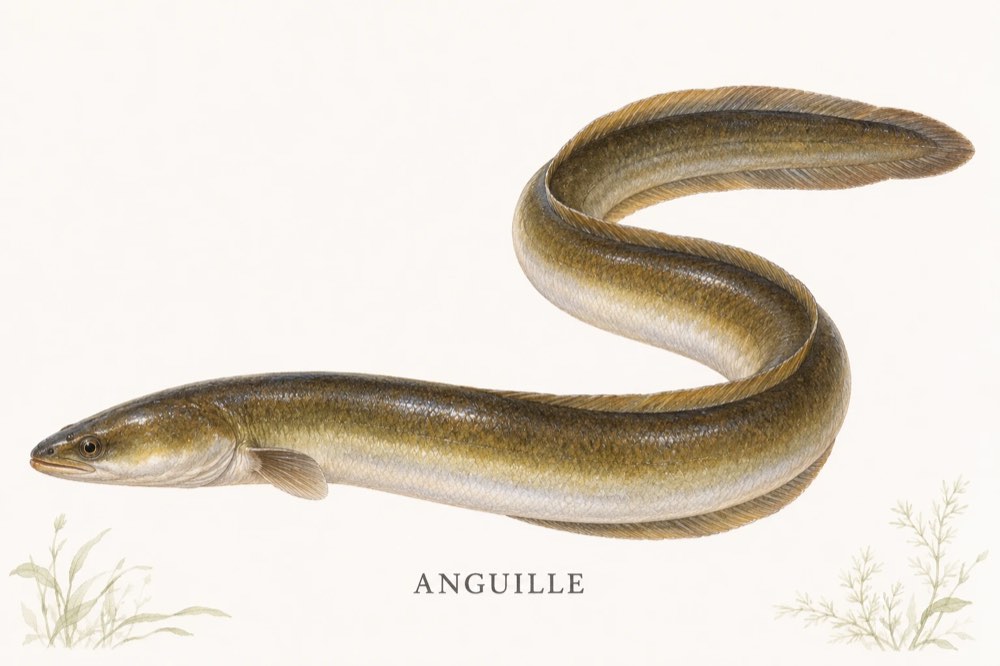
The eel
The emblem of the Haute Somme. It is now protected: fishing it is tightly regulated (see below).
This list is not exhaustive. It gathers the species most often cited for the calm waters of the valley; for a precise list, the Somme Federation for Fishing and the Protection of Aquatic Environments is the best source.
Fishing in the valley
Freshwater fishing in France requires a fishing licence and respect for a few rules.
- The fishing licence. You buy it online at cartedepeche.fr and it makes you a member of an approved fishing association (AAPPMA). There is an annual licence, a licence for minors, "discovery" licences (women, under 12s), a seven-day weekly licence and a daily licence.
- Where to fish? Each stretch belongs to a holder of the fishing rights (association, municipality, pond owner). To find out who manages a particular stretch, contact the Somme Federation for Fishing and the Protection of Aquatic Environments, or use the association search on cartedepeche.fr.
- Pike. The pike season runs from the last Saturday of April to the last Sunday of January, with a minimum size. Size and bag limits change: check before you go.
- Eel. Silver eels and glass eels are prohibited. Yellow eels may only be fished during a period set each year, with a fishing logbook and a declaration of catches.
- Near locks. It is forbidden to fish within 50 metres downstream of a lock or weir, except with a single rod.
These are the national rules, as they can be read in 2026. The Somme order and local regulations apply on top: they prevail, and they change from year to year.
Do you know a good spot, an association or a stretch worth mentioning? Write to us: we will gladly add it.
Kayak, paddleboard and a stroll at Cappy
Five kilometres away, the port of Cappy is the starting point for trips along the water.
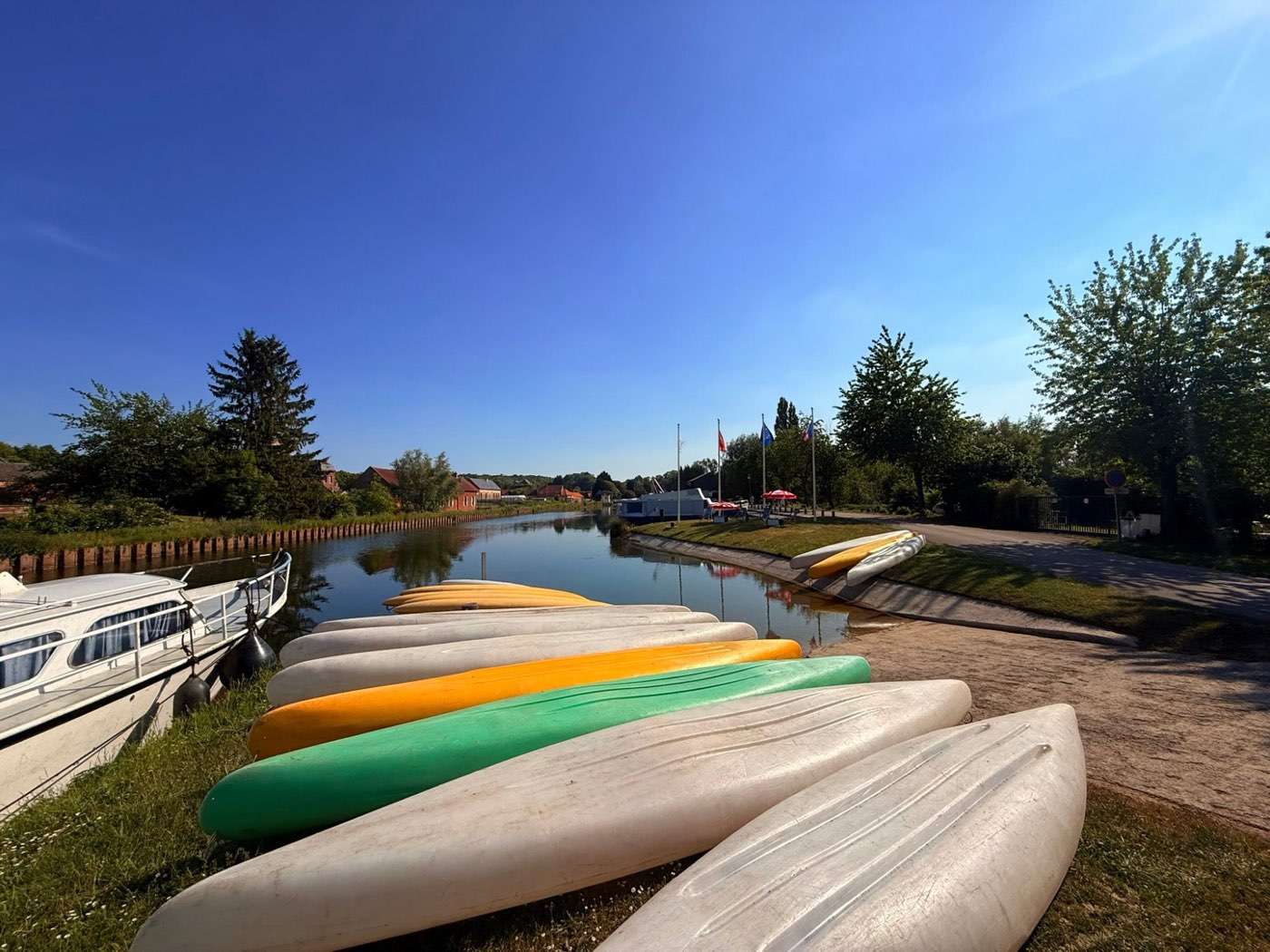
At the port, the Cappy water sports centre, run by the association Bivouac en Somme, hires out kayaks, paddleboards, pedal boats and bicycles. You glide along the canal between Cappy and Frise, beside a towpath ideal for walking and cycling.
The port of Cappy is also a stopping place for pleasure boats. The centre opens in season and its hours and prices change from year to year: the centre's information page gives up-to-date details.
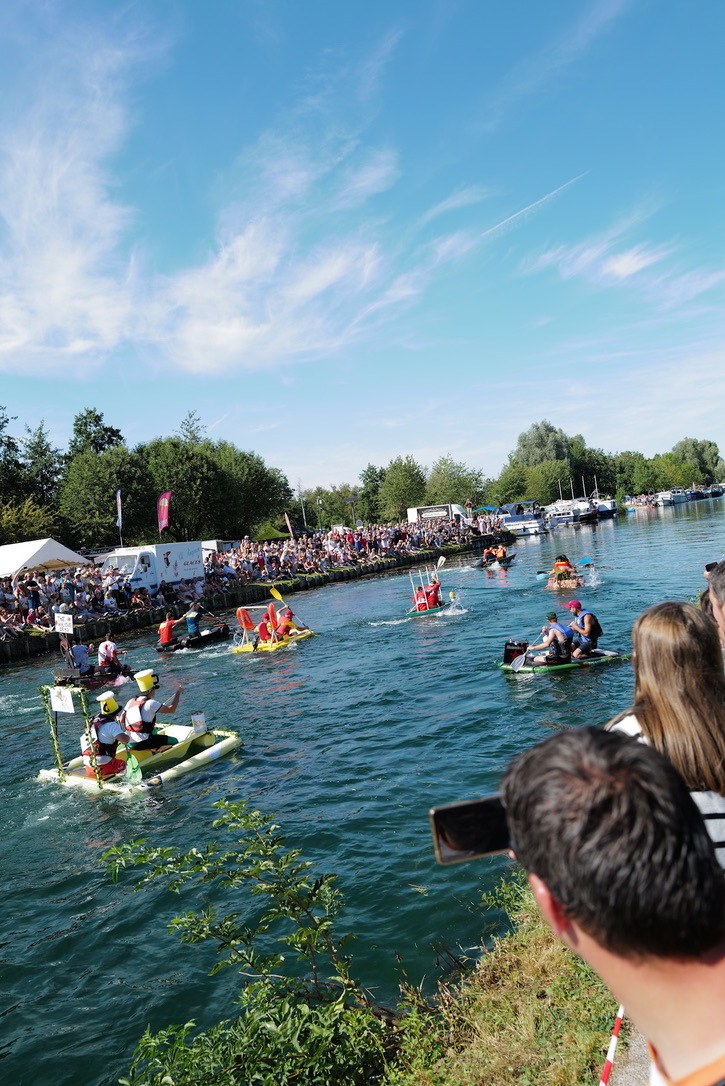
The port also hosts, once a year and for a few years now, the Cappy bathtub race: costumed crews compete on makeshift craft, watched by a crowd lining the quays.
For walks and bike rides, see Around the village.